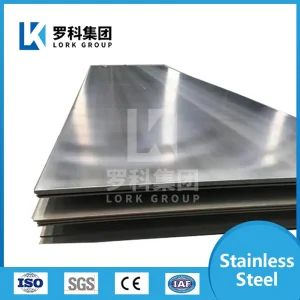
Premium raw materials and semi-finished products for surgical implants, certified under ASTM F138, ASTM F139, and ISO 5832 specifications.
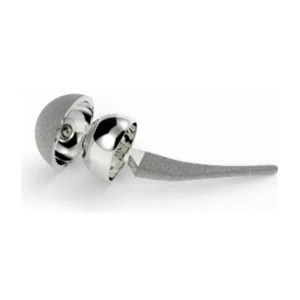
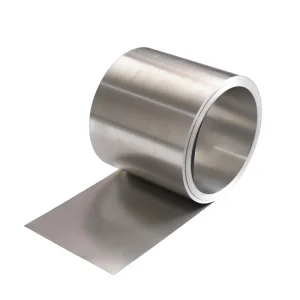
Hangzhou Retra Medical Co., Ltd. is a leading manufacturer of high-performance medical metals and orthopedic implants, specializing in Medical Titanium, Stainless Steel, CoCrMo, Tantalum, and Nitinol. With a strong commitment to research, development, and precision manufacturing, Retra Medical has become a trusted partner for hospitals, clinics, and medical device companies worldwide.
The company offers a comprehensive range of orthopedic and surgical implants, including joint replacement components, spinal systems, trauma plates and screws, maxillofacial reconstruction devices, and custom implant solutions. All products are manufactured using surgical-grade metals that ensure biocompatibility, durability, and corrosion resistance, meeting the stringent standards of the global healthcare industry.
Retra Medical emphasizes innovation and quality control, combining advanced production techniques with rigorous testing to ensure every implant delivers reliable performance and patient safety. The company also provides customized solutions tailored to specific clinical needs, supporting minimally invasive surgery, complex trauma repair, and long-term implant success.
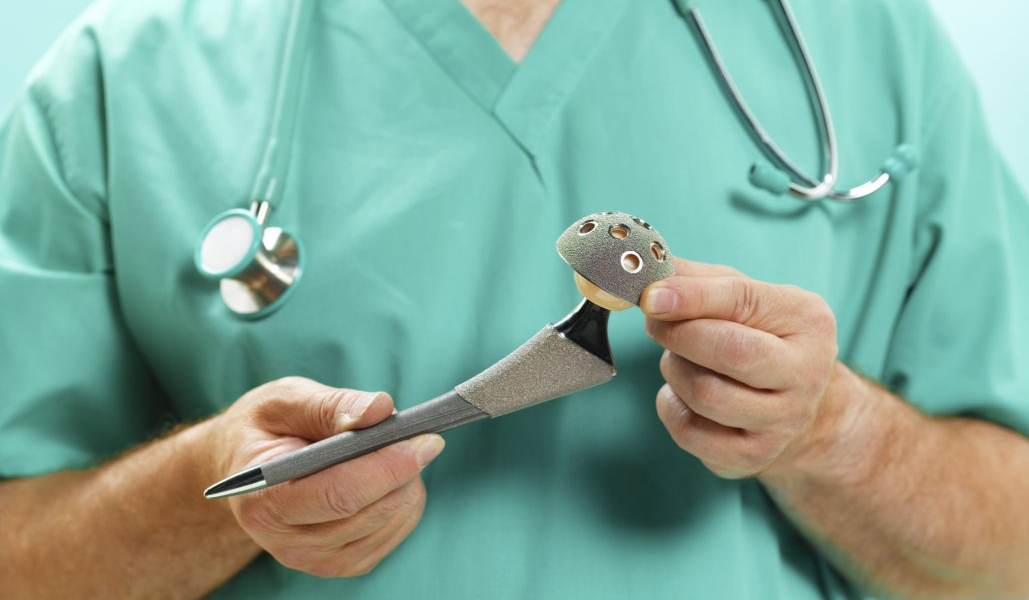
Analyzing the global trade patterns, material supply chains, and the evolving medical device infrastructure in Malabo, Bata, and beyond.
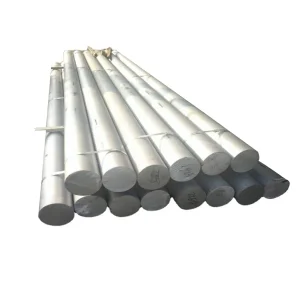
The demand for ultra-clean biomaterials (such as ASTM F138 316LVM and ISO 5832-1) is driven by aging demographics and advanced orthopedic protocols. As a leading manufacturer, Retra Medical ensures steady global exports by bridging supply gaps with high-quality billet, bars, sheets, and custom wires.
Equatorial Guinea is upgrading its critical healthcare networks (such as La Paz Medical Center in Malabo and facilities in Bata). Sourcing surgical-grade raw materials directly from certified exporters ensures local distributors and hospitals have a reliable pathway to high-quality implantable components.
Importing high-specification metals directly from a manufacturer eliminates multi-tier middleman pricing. We optimize shipping to the ports of Malabo and Bata, ensuring compliant documentation, clean packaging, and corrosion-preventive shipping protocols for critical medical stock.
Guided by the principles of "quality first, innovation-driven, customer-oriented," Hangzhou Retra Medical has earned an excellent reputation both domestically and internationally. With a dedicated R&D team, modern production facilities, and professional after-sales support, the company continues to advance the orthopedic and surgical implant industry, providing safe, high-quality, and reliable solutions that improve patient outcomes and support healthcare innovation worldwide.
Our materials undergo double vacuum melting (Vacuum Induction Melting + Vacuum Arc Remelting) to achieve extreme cleanliness. This process removes trace inclusions that could cause micro-fractures in high-load orthopedic applications like pedicle screws, intramedullary nails, and femoral stems.
Understanding why ASTM F138 / UNS S31673 (316LVM) remains the gold standard for temporary and permanent orthopedic fixation devices.
Medical-grade stainless steel differs fundamentally from industrial 316L. The suffix "VM" denotes Vacuum Melting (typically VIM followed by VAR). This double-remelting process reduces the concentration of non-metallic inclusions (oxides, silicates, alumina) to absolute minimums according to ASTM E45. This micro-structural purity is critical for preventing in-vivo stress corrosion cracking (SCC) and fatigue failure.
In human surgical environments, materials must withstand bodily fluids rich in chloride ions. Standard 316L stainless steel contains higher carbon levels and higher inclusion densities, which can act as initiation sites for crevice and pitting corrosion. Implant-grade 316LVM features a strictly controlled chemistry:
| Element | ASTM F138 / UNS S31673 Specification (%) | Role in Surgical Performance |
|---|---|---|
| Carbon (C) | 0.030 max | Prevents carbide precipitation at grain boundaries, maximizing sensitization resistance. |
| Chromium (Cr) | 17.00 - 19.00 | Provides the stable, passive chromium-oxide surface film that prevents tissue exposure to iron. |
| Nickel (Ni) | 13.00 - 15.00 | Stabilizes the fully austenitic structure, maintaining non-magnetic behavior in MRI environments. |
| Molybdenum (Mo) | 2.25 - 3.00 | Significantly enhances resistance to localized pitting and crevice corrosion in saline solutions. |
| Nitrogen (N) | 0.10 max | Enhances yield strength while maintaining excellent ductility and structural stability. |
| Copper, Sulfur, Phosphorus | Strict trace limits | Minimizing inclusions to prevent structural flaws under high fatigue loading. |
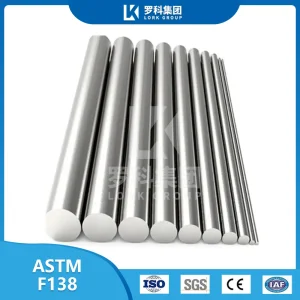
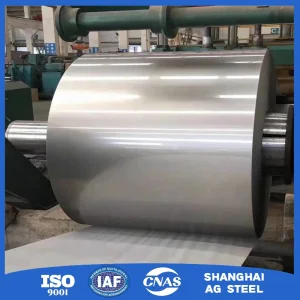
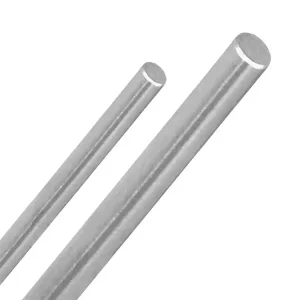
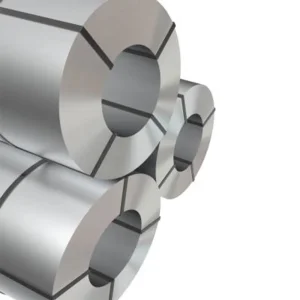
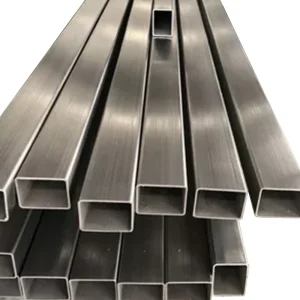
Our raw materials are processed through cold drawing, solution annealing, and centerless grinding to meet precise mechanical specifications. For orthopedic bone plates and bone screws, the material must exhibit a fine grain size (typically ASTM No. 5 or finer) to guarantee high fatigue strength and yield limit. Retra Medical's advanced metallurgy ensures that every batch of 316LVM coils, bars, and tubes exceeds the tensile and elongation thresholds required by international regulators.
Surgical-grade steel tailored to withstand high humidity, coastal environmental storage, and demanding clinical applications.
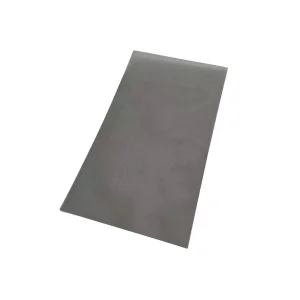
Specifically used to machine bone plates for fracture reduction. Because of its ductility, orthopedic surgeons in Equatorial Guinea can contour plates during surgery without risk of micro-fracturing the implant's core matrix.
For high-durability retractors, scalpels, bone chisels, and drills. Resistant to frequent steam autoclaving cycles at Malabo General Hospital and other regional surgical hubs, ensuring long-term sterilizability.
Coastal and tropical conditions in Central Africa demand materials with superior corrosion resistance during transit and storage. Our packaging utilizes hermetic, humidity-controlled seals to protect the passive oxide film on 316LVM bars.
A statistical overview of Retra Medical's raw material standards, manufacturing capacity, and global delivery reliability.
Anticipating the future of bio-metals and advanced implant manufacturing technologies through 2030.
Developing ultra-fine grain structures (ASTM No. 10 or higher) for pediatric and dental implants. Refined grain boundaries dramatically improve cyclic fatigue resistance, allowing for thinner implant walls.
Integrating silver-ion and hydroxyapatite surface treatment technologies on our 316LVM surgical wire and rods. This reduces surgical-site infection (SSI) risks and promotes faster bone apposition.
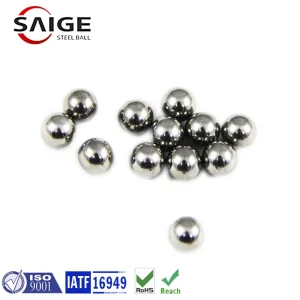
Expanding the production of high-spherical 316LVM and Titanium powders optimized for Selective Laser Melting (SLM). This enables hospitals to customize patient-specific cranial and trauma plates on-site.
Expert metallurgical and logistical guidance for surgical instrument fabricators and medical device importers in Equatorial Guinea.
Standard 316L is melted in open air, which leaves small amounts of microscopic slag and non-metallic inclusions. 316LVM undergoes Vacuum Induction Melting (VIM) and subsequent Vacuum Arc Remelting (VAR). This double remelting process removes volatile impurities, resulting in a cleaner material that minimizes cell reaction in-vivo and has higher fatigue life.
Yes. Every batch of implant-grade stainless steel from Hangzhou Retra Medical comes with material test reports (MTRs) certifying chemical composition, micro-cleanliness (according to ASTM E45 Method A), grain size, mechanical properties (yield, tensile, elongation), and ultrasonic testing results.
We manage door-to-port or CIF shipping options. Materials are protected against high ocean humidity with heavy-duty desiccants and vapor-corrosion inhibitor (VCI) shrink wrap, then packed in solid wooden crates to ensure they arrive in sterile condition, free from physical scoring or oxidation.
Yes. 316LVM is widely specified for joint prostheses, bone plates, bone screws, pedicle screws, and intramedullary pins. For longer-term permanent loading under extreme conditions, we also export Titanium Grade 5 (Ti6Al4V ELI) and Cobalt-Chromium-Molybdenum alloys (CoCrMo).
We supply rods with centerless ground and polished finishes (h7 to h9 tolerances). This minimizes micro-grooves, reducing surface area exposed to tissue contact and ensuring precise feed-ability in CNC Swiss-turning machines.
We support various verification programs, including ultrasonic testing (UT), intergranular corrosion testing (ASTM A262 Practice E), grain size evaluation, Rockwell hardness, and chemical analysis. Certified documentation is provided with every shipment.
Explore our extended range of premium implantable products, wires, bars, and customized structures for specialized surgeries.
 Retra Medical