Explore our top-tier catalog of precision CNC-machined titanium parts, micro maxillofacial bridge plates, and biocompatible medical alloy solutions.
Hangzhou Retra Medical Co., Ltd. is a leading manufacturer of high-performance medical metals and orthopedic implants, specializing in Medical Titanium, Stainless Steel, CoCrMo, Tantalum, and Nitinol. With a strong commitment to research, development, and precision manufacturing, Retra Medical has become a trusted partner for hospitals, clinics, and medical device companies worldwide.
The company offers a comprehensive range of orthopedic and surgical implants, including joint replacement components, spinal systems, trauma plates and screws, maxillofacial reconstruction devices, and custom implant solutions. All products are manufactured using surgical-grade metals that ensure biocompatibility, durability, and corrosion resistance, meeting the stringent standards of the global healthcare industry.

Retra Medical emphasizes innovation and quality control, combining advanced production techniques with rigorous testing to ensure every implant delivers reliable performance and patient safety. The company also provides customized solutions tailored to specific clinical needs, supporting minimally invasive surgery, complex trauma repair, and long-term implant success.
Guided by the principles of "quality first, innovation-driven, customer-oriented," Hangzhou Retra Medical has earned an excellent reputation both domestically and internationally. With a dedicated R&D team, modern production facilities, and professional after-sales support, the company continues to advance the orthopedic and surgical implant industry, providing safe, high-quality, and reliable solutions that improve patient outcomes and support healthcare innovation worldwide.
Navigating complex regulatory shifts, material supply chain resilience, and Total Cost of Ownership (TCO) in healthcare procurement.
Global medical device procurers are facing tightening oversight under regulations like the EU Medical Device Regulation (MDR 2017/745) and FDA 510(k) clearances. Manufacturers must deliver pristine traceability logs, chemical analysis, and biocompatibility studies for raw Ti-6Al-4V ELI materials to prevent device recall risks.
Selecting a Chinese manufacturing partner goes beyond unit price. Efficient medical procurement demands zero-defect yields, minimal tooling lead times for custom plates, and direct-to-sterile packaging capabilities. Reducing surface defects through advanced chemical anodization preserves surgical safety margins.
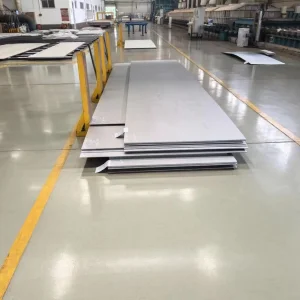
Supply chains for Grade 23 titanium and medical-grade Nitinol demand dedicated feedstock verification. By structuring integrated smelting, rolling, and high-precision CNC turning, Retra Medical ensures steady component supply limits despite global industrial raw material volatility.
Strategic Procurement Insight: Hospitals and device OEMs are transitioning from transactional relationships to strategic co-development. Having an ISO 13485-certified manufacturer with in-house custom CNC tooling dramatically compresses development cycles from years to months.
A detailed comparative analysis of surgical-grade titanium alloys and their mechanical performance characteristics.
| Metal Alloy Grade | Standards Compliance | Tensile Strength (MPa) | Yield Strength (MPa) | Primary Clinical Applications |
|---|---|---|---|---|
| Titanium Grade 5 (Ti-6Al-4V) | ASTM F136 / ISO 5832-3 | ≥ 860 | ≥ 795 | Spinal cages, pedicle screws, high-load trauma plates |
| Titanium Grade 23 (Ti-6Al-4V ELI) | ASTM F136 / ISO 5832-3 | ≥ 825 | ≥ 760 | Minimally invasive osteosynthesis, micro maxillofacial plates |
| Pure Titanium (Gr 1 - Gr 4) | ASTM F67 / ISO 5832-2 | 240 - 550 | 170 - 483 | Dental implants, skull reconstruction grids, low-load bone staples |
| Nitinol (Shape Memory) | ASTM F2063 | ≥ 895 | 195 - 690 | Self-expanding stents, active orthodontic wires, dynamic staples |
Orthopedic implants operate under grueling mechanical load cycles inside the human body. To prevent stress shielding (where bone density decreases because the metal plate carries too much load), our design team balances material thickness with mechanical elasticity. By utilizing Grade 23 ELI (Extra Low Interstitial) titanium, we lower oxygen and iron concentrations, optimizing fracture toughness and fatigue resistance compared to standard industrial-grade titanium alloys.
High-precision orthopedic systems customized for specific anatomical zones and clinical biomechanical requirements.
Our trauma solutions feature locking compression plates (LCP) optimized for clavicle, humerus, and femur fractures. Utilizing polyaxial locking holes allows surgeons to target screws at specific angles, ensuring superior mechanical fixation in osteoporotic bone.
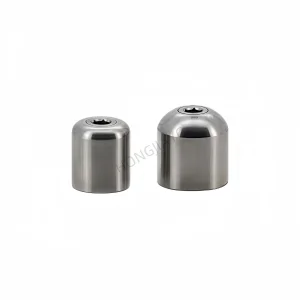
Engineered using CNC turned Titanium Gr5 (Model Mc-Ti-018), our pedicle screws and rods are design-tested to withstand up to 10 million cycles of dynamic bending stress without micro-fracturing, providing secure immobilization during spinal fusion.
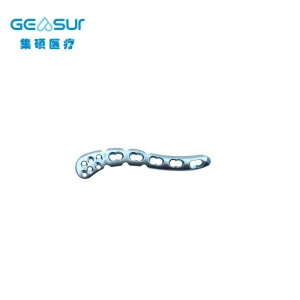
For delicate facial structures, we supply ultra-thin micro bridge plates (0.6mm thickness) with 1.5mm locking screws. These titanium plates are easily bendable to conform precisely to cranial contours while maintaining rigidity during healing.
The evolving horizon of medical implant manufacturing: 3D printing, bio-active coatings, and smart sensor materials.
Moving from pure CNC subtractive manufacturing to hybrid additive manufacturing. 3D-printed porous titanium structures mimic trabecular bone, drastically increasing osseointegration rates and decreasing rehabilitation periods for joint replacements.
Deploying advanced Plasma Electrolytic Oxidation (PEO) and Hydroxyapatite (HA) crystalline deposition. These surface enhancements prevent metal ion leaching while actively attracting osteoblast cells to ensure chemical anchorage.
R&D projects focusing on Magnesium-Zinc-Calcium alloy plates. These temporary fixation structures dissolve harmlessly in the body after the bone heals, bypassing the need for secondary implant removal surgeries.
How Retra Medical manages end-to-end quality assurance to satisfy FDA, CE MDR, and ISO international parameters.
To guarantee that every batch of titanium implants shipped is safe for human contact, Retra Medical enforces a multi-phase quality check. Our medical metals undergo:
Through complete material tracking from ingot to finished bone plate, we protect surgical operations and eliminate implant failure liabilities.
ISO 13485:2016 - Medical devices quality management systems standard.
FDA 510(k) - Regulatory clearance pathway for orthopedics.
CE Mark (MDR) - Regulatory conformity for distribution across the EU.
ASTM F136 / F67 - Global standard specifications for surgical implant applications.
Expert insights on orthopedic metal selection, medical plate customization, and procurement pathways.
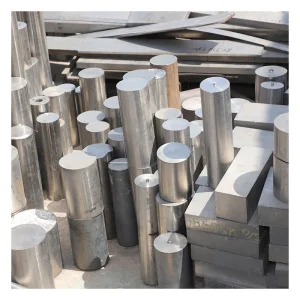
High-purity raw metals, Nitinol shape-memory elements, and specialized custom surgical equipment.
 Retra Medical