The demand for surgical-grade titanium has experienced exponential growth due to the convergence of an aging global population, the expansion of advanced healthcare infrastructure, and continuous breakthroughs in biocompatible metallurgy. Primarily recognized for its unmatched strength-to-weight ratio, superb corrosion resistance, and superb bio-inertness, surgical titanium (principally Grade 5 Ti-6Al-4V ELI and Grade 23 ASTM F136) serves as the structural foundation for modern medical devices and clinical prosthetics.
Across the Americas, Europe, and Asia-Pacific, healthcare policies are placing heavier emphasis on long-term clinical efficacy and patient outcome quality. Consequently, sourcing high-purity medical metals has transitioned from standard transactional purchasing to strategic collaborative partnerships. Regulatory protocols dictate that raw metals destined for internal human fixation must guarantee absolute structural integrity, minimal toxicological shedding, and zero defect rates under variable physiological stresses. The global market value for medical-grade titanium is projected to expand significantly, driven by a surge in joint replacements, cranial recon systems, and dental restoration technologies.
Hangzhou Retra Medical Co., Ltd. is a leading manufacturer of high-performance medical metals and orthopedic implants, specializing in Medical Titanium, Stainless Steel, CoCrMo, Tantalum, and Nitinol. With a strong commitment to research, development, and precision manufacturing, Retra Medical has become a trusted partner for hospitals, clinics, and medical device companies worldwide.
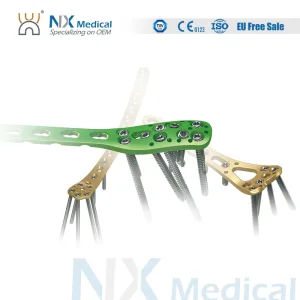
The company offers a comprehensive range of orthopedic and surgical implants, including joint replacement components, spinal systems, trauma plates and screws, maxillofacial reconstruction devices, and custom implant solutions. All products are manufactured using surgical-grade metals that ensure biocompatibility, durability, and corrosion resistance, meeting the stringent standards of the global healthcare industry.

Retra Medical emphasizes innovation and quality control, combining advanced production techniques with rigorous testing to ensure every implant delivers reliable performance and patient safety. The company also provides customized solutions tailored to specific clinical needs, supporting minimally invasive surgery, complex trauma repair, and long-term implant success.
Guided by the principles of "quality first, innovation-driven, customer-oriented," Hangzhou Retra Medical has earned an excellent reputation both domestically and internationally. With a dedicated R&D team, modern production facilities, and professional after-sales support, the company continues to advance the orthopedic and surgical implant industry, providing safe, high-quality, and reliable solutions that improve patient outcomes and support healthcare innovation worldwide.
In the global bio-alloy supply chain, Chinese industrial capabilities offer a distinct advantage by pairing raw material extraction and purification with precision micro-machining. Factories in key metallurgical hubs, including our Hangzhou facilities, rely on vertically integrated structures. We supervise every phase, from raw vacuum arc remelting (VAR) to five-axis CNC milling, Swiss-type lathe machining, and final passivated electrochemical cleaning.
Direct supply paths to high-grade titanium sponge and alloy components reduce the threat of price volatility. This integration ensures structural traceability from raw ingot to clinical implants.
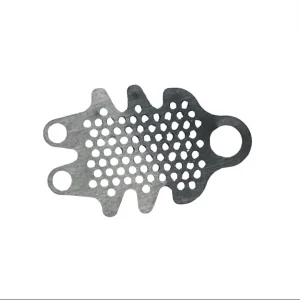
By using Swiss-type CNC micro-turning and EDM wire-cutting machines, we produce complex geometries, such as micro-cranial mesh plates and variable-angle bone screws, within tolerances of ±3 microns.
Every production batch undergoes thorough testing, including ultrasonic flaw detection, mechanical fatigue testing, and ICP-AES chemical composition audits, maintaining compliance with global standards.
Surgical-grade titanium is versatile and supports a variety of medical sectors, from human osteosynthesis implants to complex veterinary surgical equipment.
Implants like locking plates, variable-angle systems, and intramedullary nails rely on titanium’s low modulus of elasticity, which reduces stress shielding and helps bone tissue heal naturally.
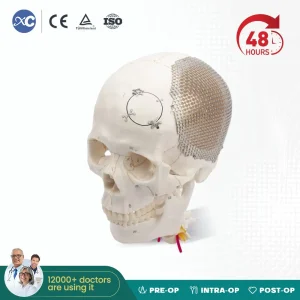
Ultra-thin cranial plates and mesh systems require malleability and rigidity. Our 3D maxillofacial mesh provides structural support while protecting sensitive brain and facial tissue.
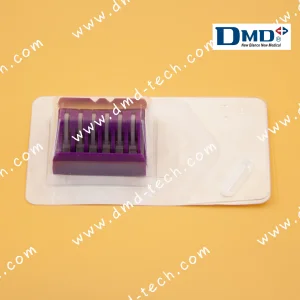
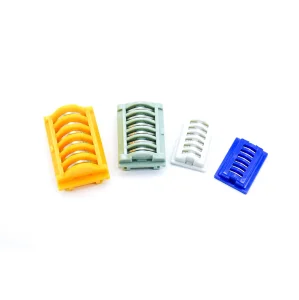
Surgical clips and vascular closure systems require non-magnetic materials that are fully compatible with MRI scans. Highly purified titanium allows for safe, long-term arterial ligation.
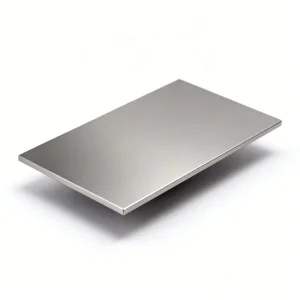
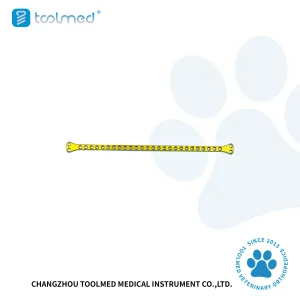
Veterinary surgeons require high-performance, cost-effective solutions. We supply miniaturized titanium plates (1.5mm to 2.4mm) to veterinary clinics globally to treat trauma in small animals.
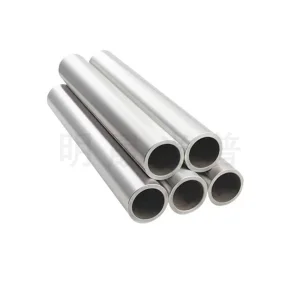
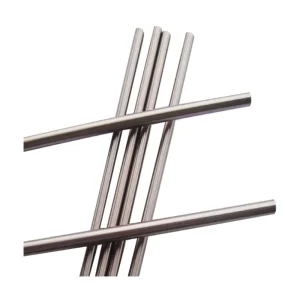
Beyond clinical applications, titanium alloy tubes are crucial in chemical processing and marine engineering. Their resistance to chloride-induced corrosion ensures durability in harsh conditions.
The future of surgical titanium points toward custom-fit implants. Traditional subtractive milling is shifting toward additive manufacturing (3D printing) using Selective Laser Melting (SLM) and Electron Beam Melting (EBM). By using spherical titanium alloy powders, manufacturers can print complex bone structures that match a patient's CT scan.
In addition, surface engineering is evolving. Anodization, acid etching, and sandblasting help modify titanium surfaces to create micro-roughness. This micro-porous structure encourages bone cells to attach directly to the metal (osseointegration), speeding up patient recovery and extending the lifespan of joint replacements.
Procuring medical metals requires careful verification to ensure patient safety and regulatory compliance. B2B buyers should evaluate several critical metrics before choosing a manufacturing partner:
Every shipment must be accompanied by Mill Test Reports detailing chemical composition and mechanical properties, verifying ASTM F136 or ISO 5832-3 compliance.
Verify that your supplier holds ISO 13485 (Medical Devices Quality Management) and ISO 9001 certifications to ensure consistent quality standards.
Ensure that all surgical implants undergo nitric or citric acid passivation to remove free iron and construct a protective, corrosion-resistant titanium oxide film.
 Retra Medical