Retra Medical
1 / 5
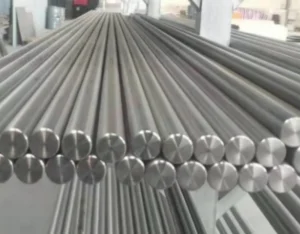
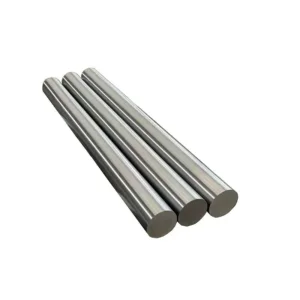
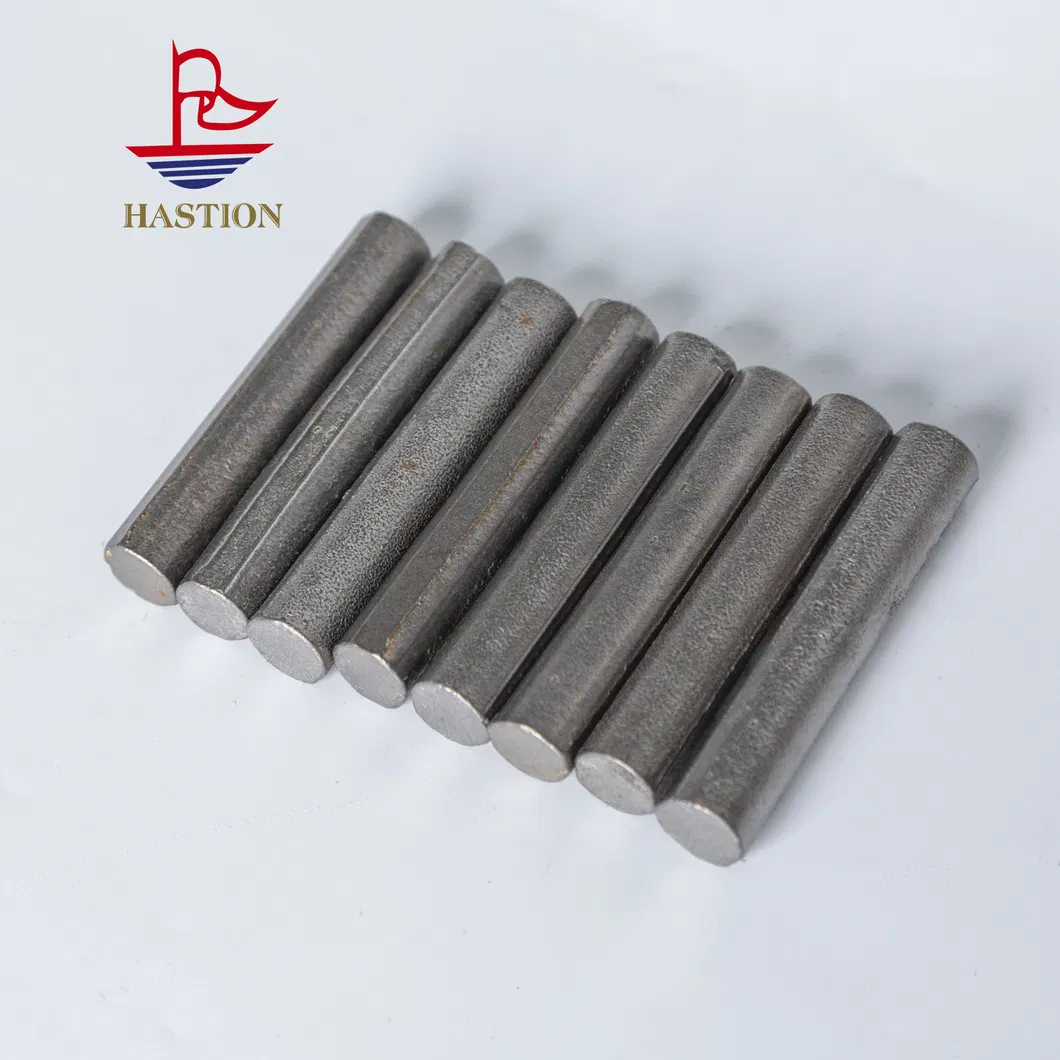
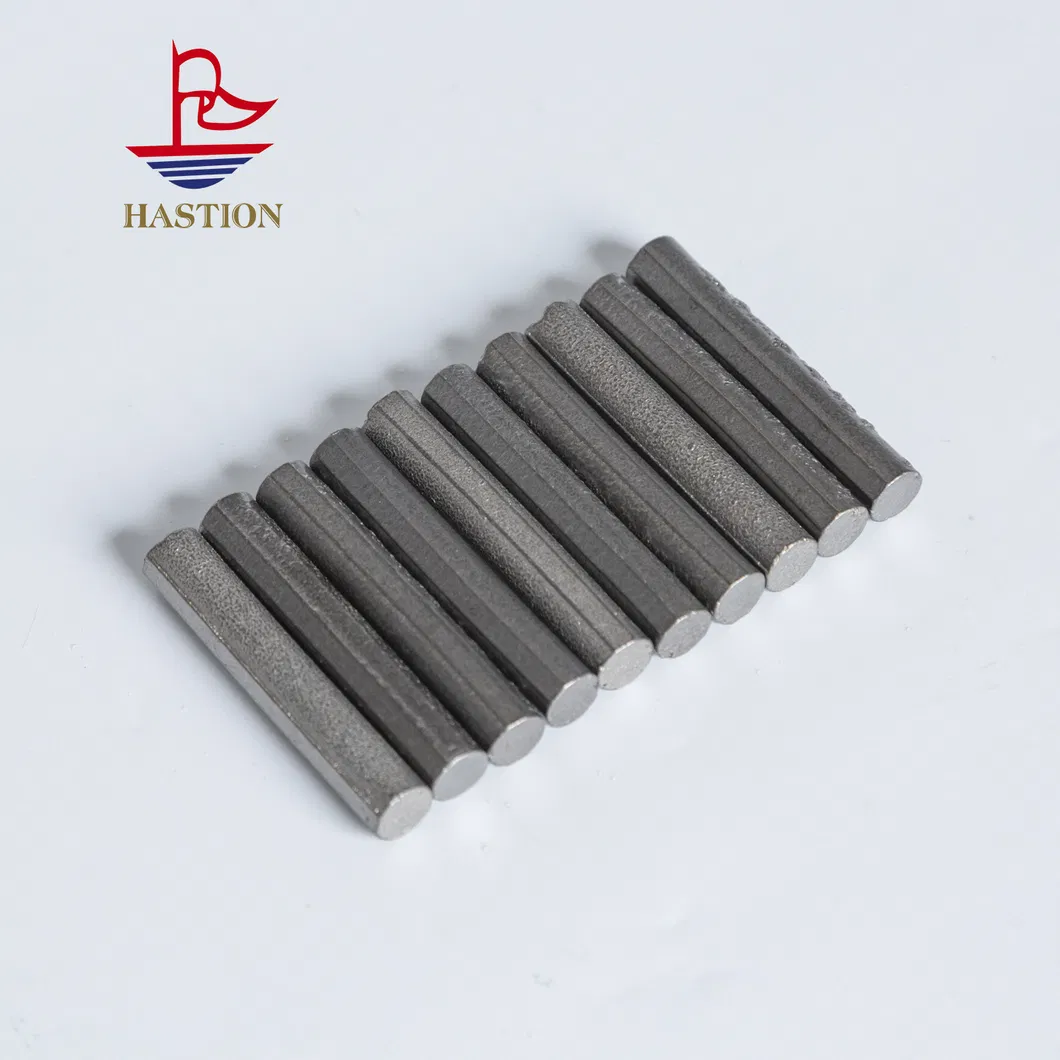
Titanium alloy bar carbide rod used for the crusher hammer head

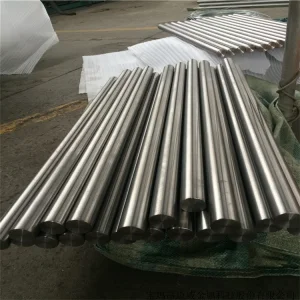
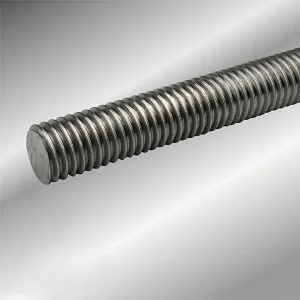
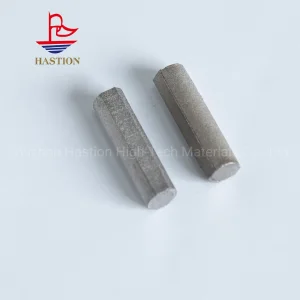
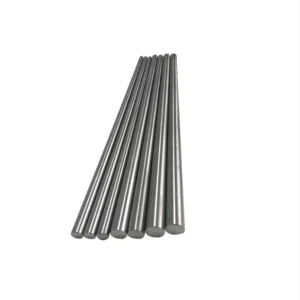
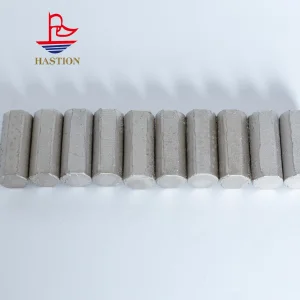
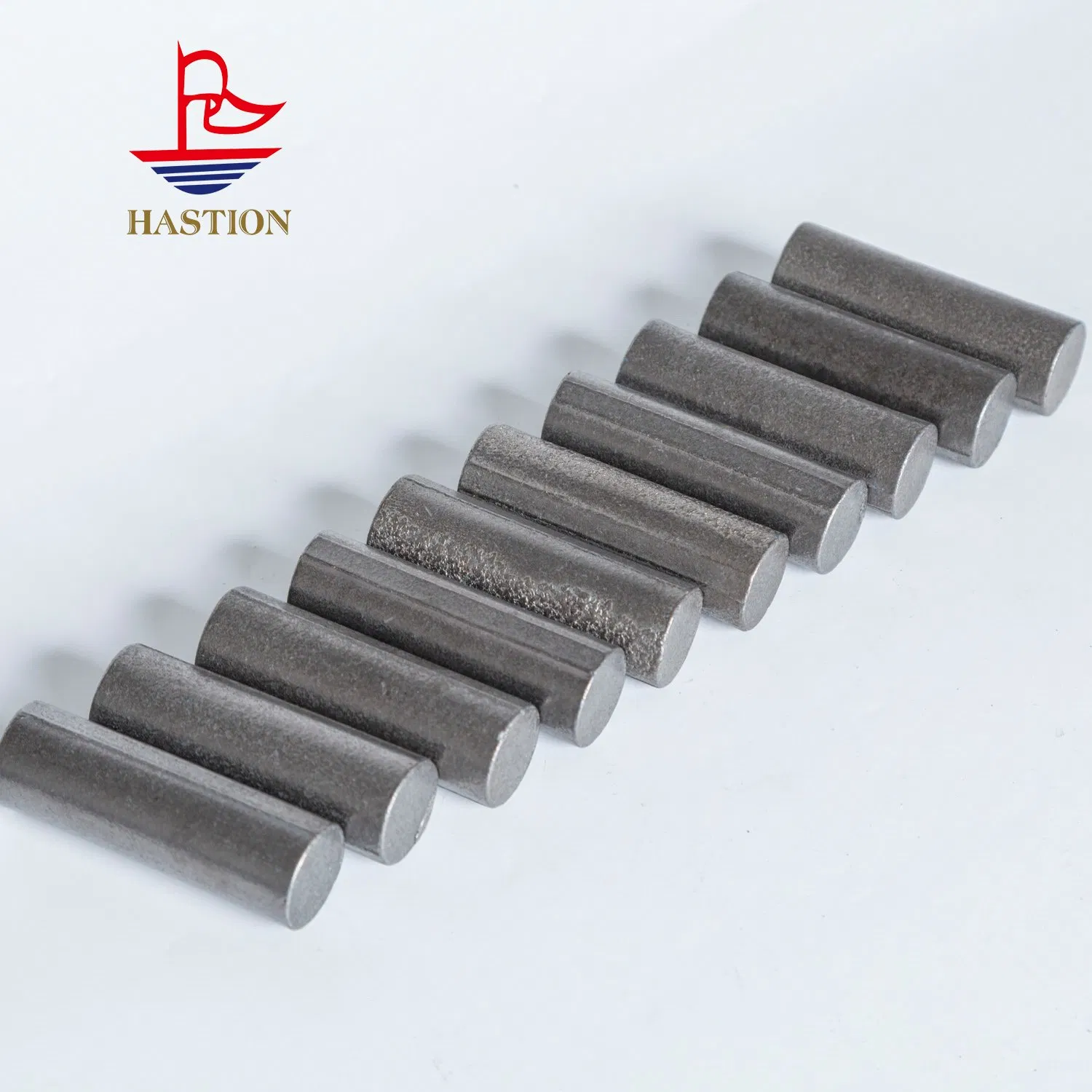
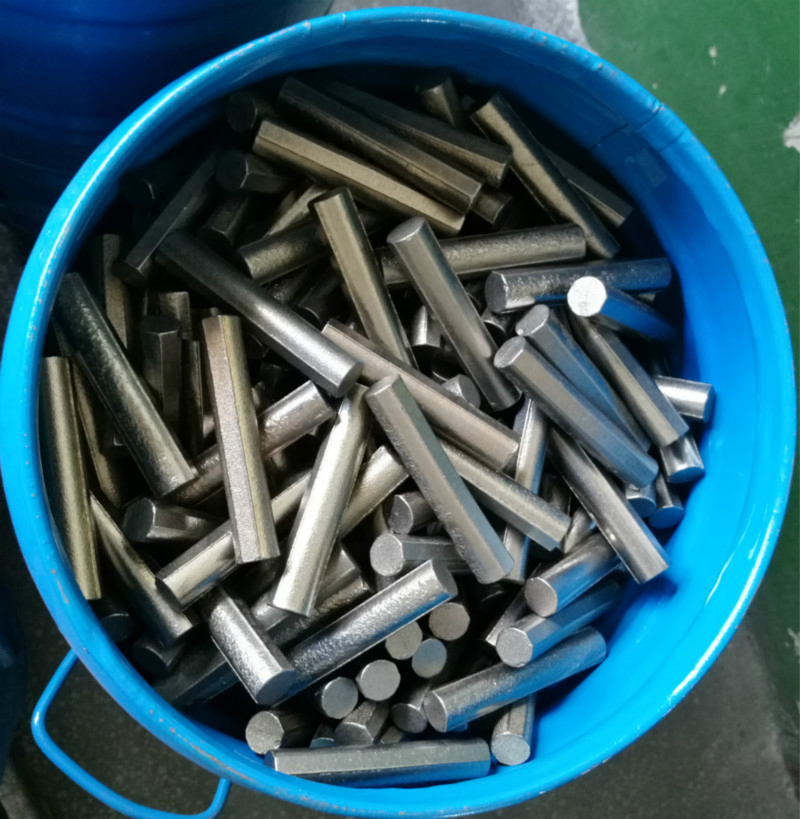
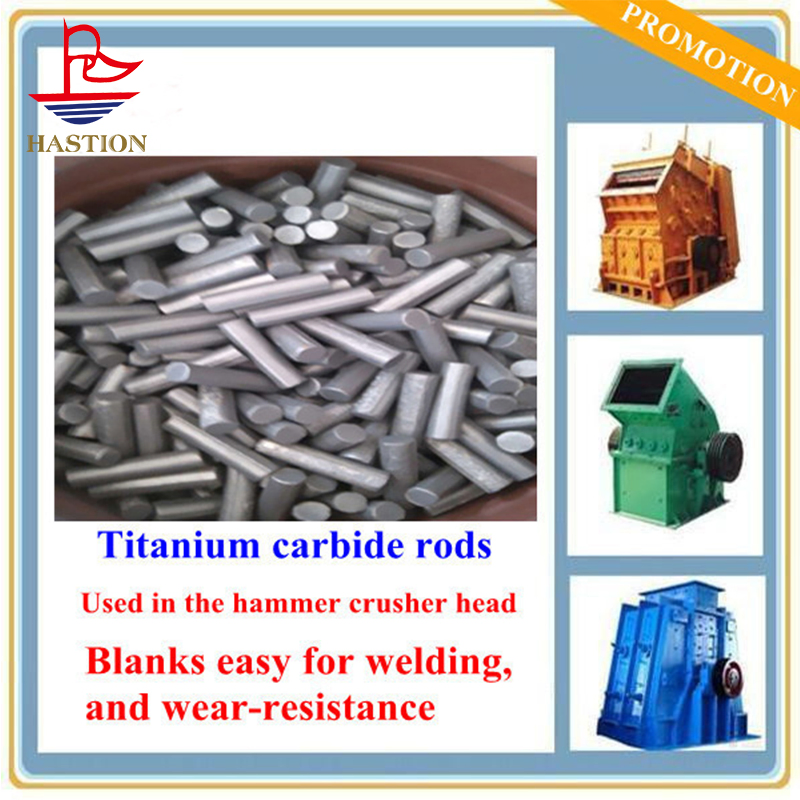
The titanium carbide cermet rod (TiC rod) belongs to steel-bonded cemented carbide, a composite material using steel as the binder phase and refractory metal carbide (mainly titanium carbide and tungsten carbide) as the hard phase. This TiC rod is a high-hardness and high-strength titanium-based alloy composite material.
| Grade | Density (g/cm3) | Hardness (HRC) | TRS (Mpa) | Porosity | Machining | Impact Toughness (J/cm2) |
|---|---|---|---|---|---|---|
| GT35 | 6.42 ~ 6.55 | ≥86 (Hardened) | ≥1400 | A04 B00 | Available | ≥3.5 |
| R5 | 6.32 ~ 6.45 | ≥86 (Hardened) | ≥1200 | A04 B00 | Available | ≥3.0 |
| TM52 | 6.12 ~ 6.25 | ≥60 (Sintered) | ≥1500 | A04 B00 | N/A | - |
| TM60 | 6.32 ~ 6.45 | ≥56 (Sintered) | - | A04 B00 | N/A | ≥6.0 |
Note: Performance indicators are based on daily production inspection values for reference.
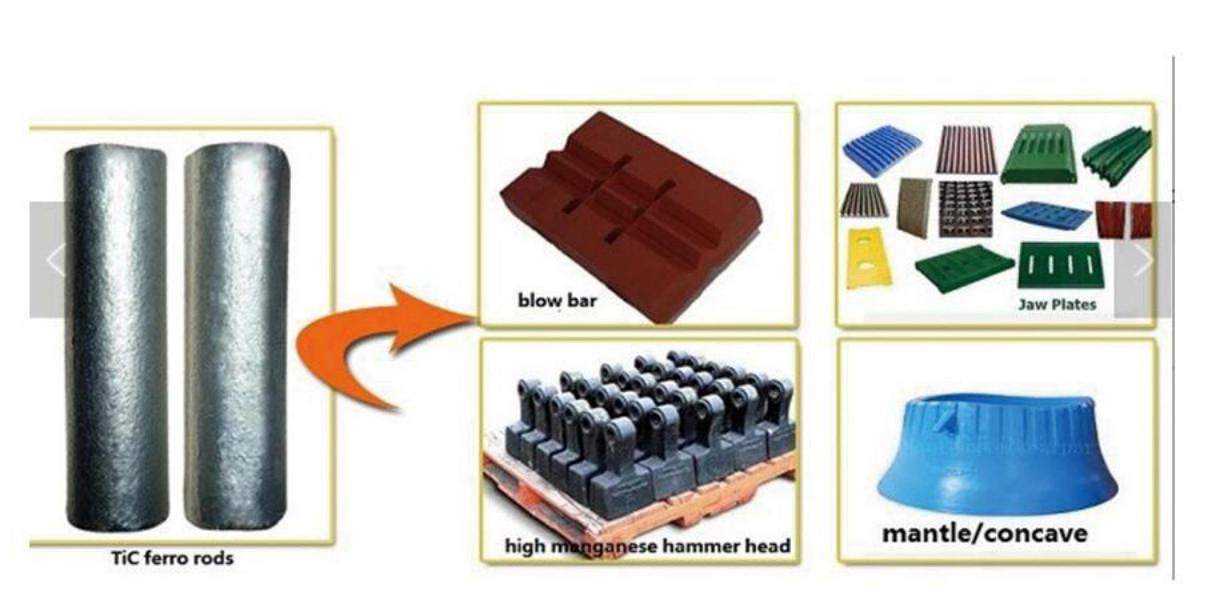
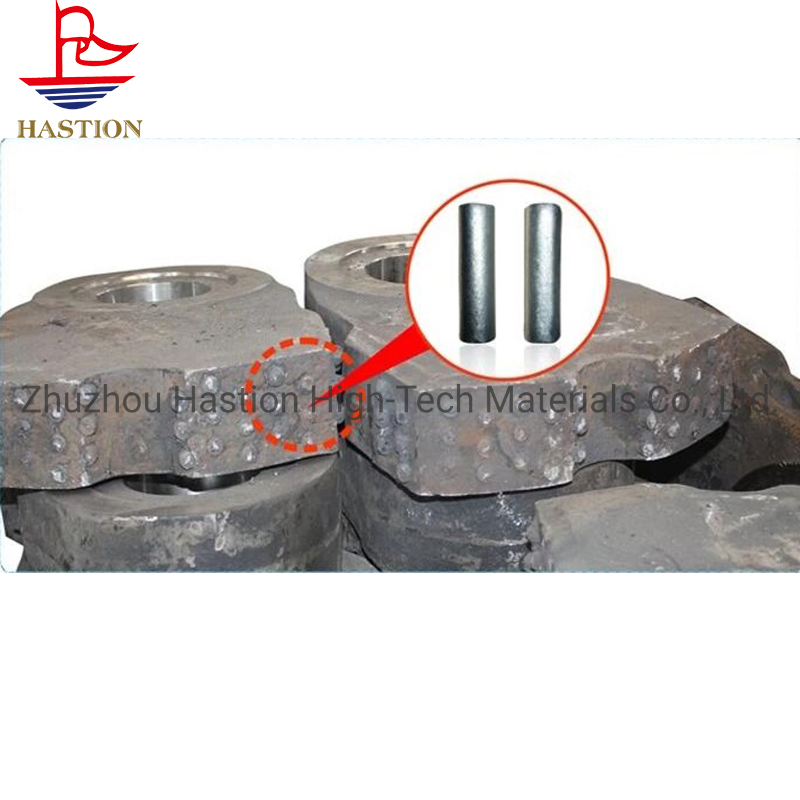
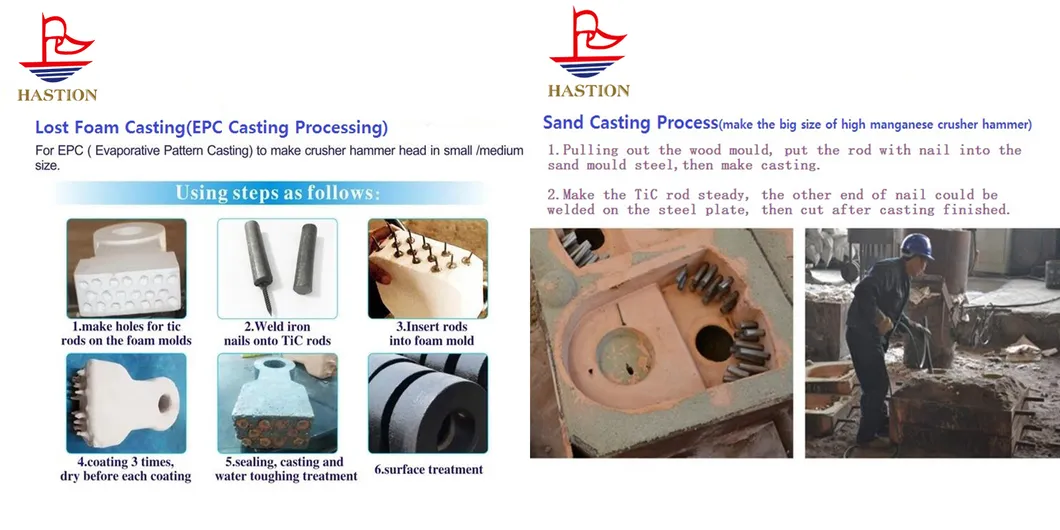
TiC rods are primarily cast into the wear parts of crusher hammers, plate hammers, jaw plates, concaves, mantles, and crushing rollers. By incorporating these rods, the matrix of high manganese steel can be effectively protected, significantly increasing the service life of crushing equipment and reducing maintenance costs.
Φ8*60(L) | Φ12*50(L) | Φ14*50(L) | Φ14*60(L) | Φ14*80(L) | Φ16*60(L) | Φ16*90(L)
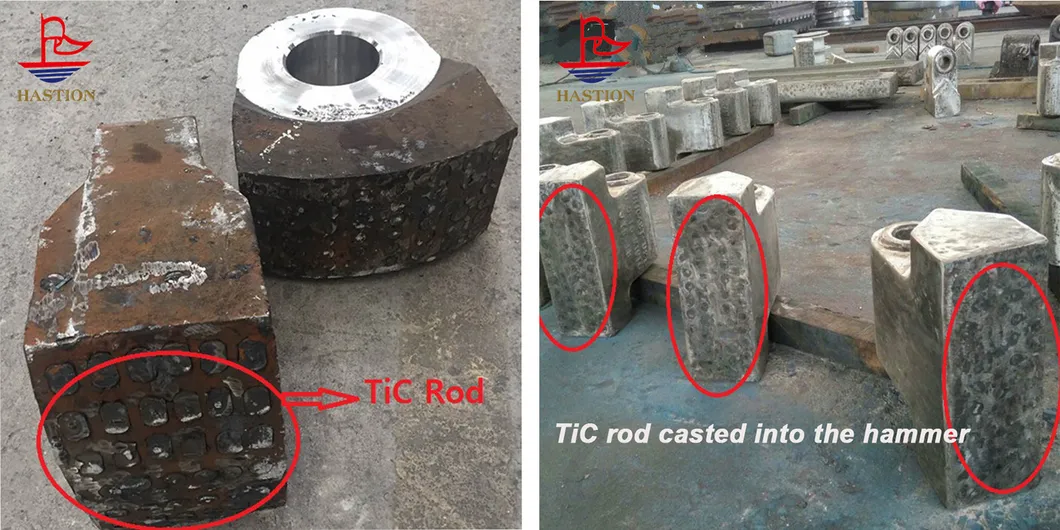
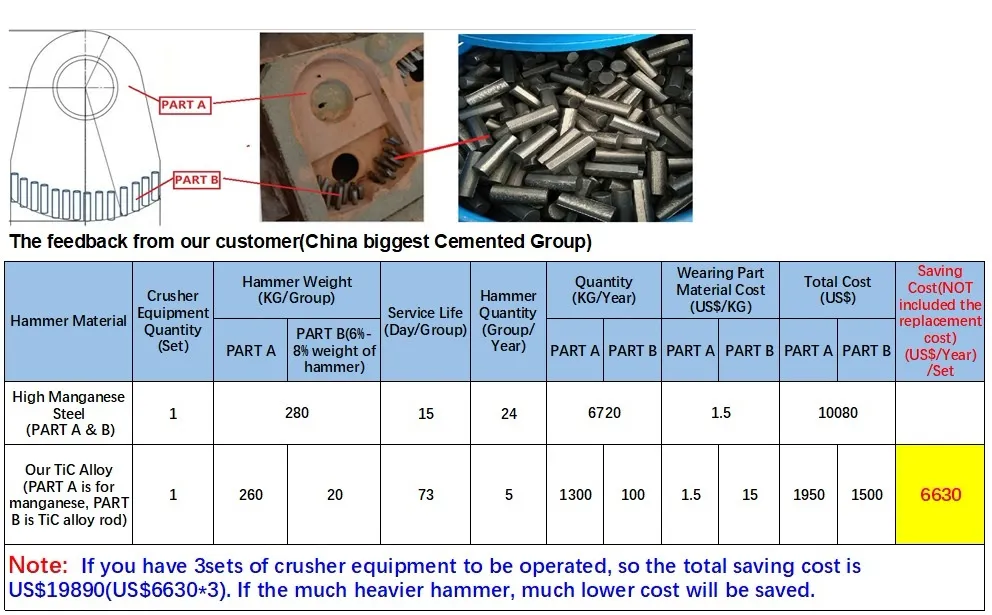
Comparison: Common High Manganese Steel Hammer vs. TiC Reinforced Hammer Head.

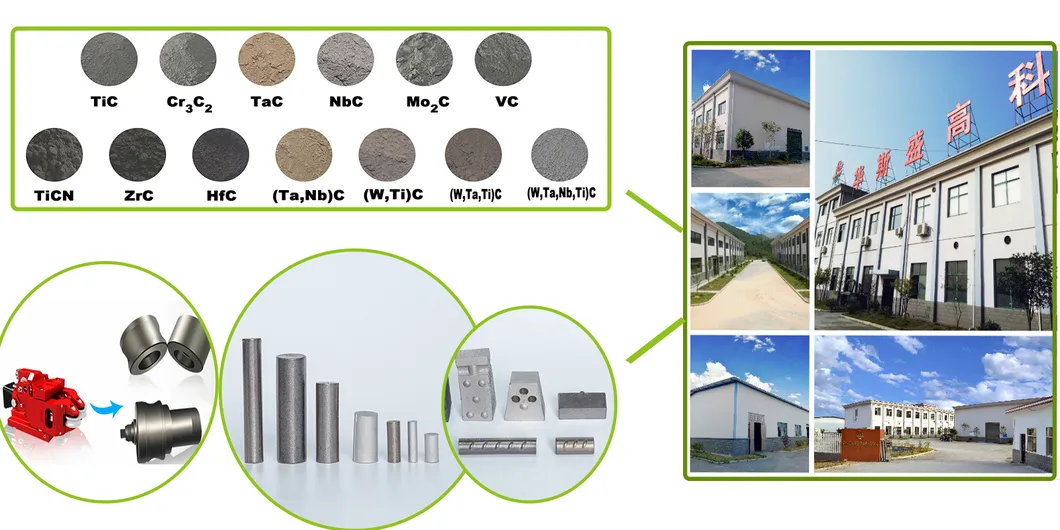
The facility covers 60,000 square meters with high-level production and inspection machinery. Operations include two main production lines:
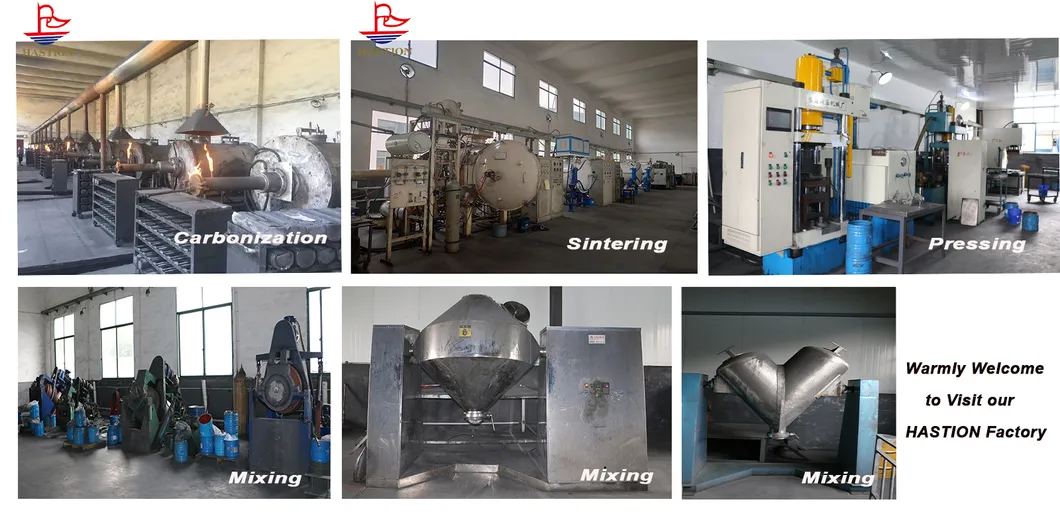
With an annual capacity exceeding 600 tons (180 tons for TiC rods and 450 tons for metal powders), the production scale continues to expand to meet international demand.

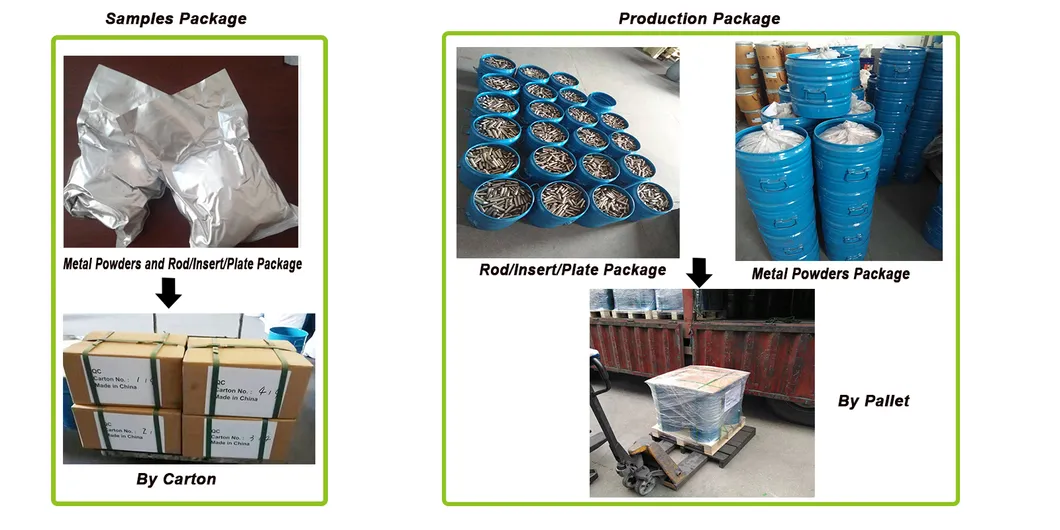
Shipping Methods: International Express (DHL, FEDEX, TNT), Sea Freight, or Air Freight.