Explore precision-engineered cranial skull plates, titanium meshes, orthopedic fasteners, and biocompatible medical alloys direct from leading Chinese exporters.
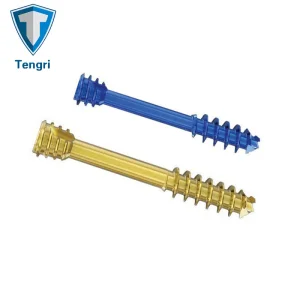
Analyzing the macro shift towards high-precision titanium mesh production, additive manufacturing, and strict international regulatory compliance.
The global craniomaxillofacial (CMF) implants market is undergoing unprecedented expansion, projected to surpass $3.5 Billion by 2030. China has evolved from a low-cost contract assembly hub into an epicenter for advanced medical-grade titanium processing, precision photochemical etching, and patient-specific implant (PSI) 3D printing.
Leading Chinese exporters now operate under rigorous quality management frameworks matching European CE MDR and US FDA 510(k) standards. Utilizing ultra-cleanroom ISO Class 7 environments and automated micro-stamping, top suppliers ensure zero-defect bio-contamination and flawless dimensional tolerances.
By leveraging Grade 2 Pure Titanium (ASTM F67) and Grade 5 Ti-6Al-4V ELI (ASTM F136), Chinese factories provide surgical solutions offering low Young's modulus, superior fatigue resistance, fast osseointegration, and radiolucency features optimized for postoperative CT/MRI imaging.
A global leader in high-performance medical metallurgy, orthopedic trauma solutions, and custom maxillofacial implant production.
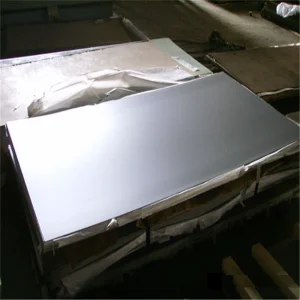
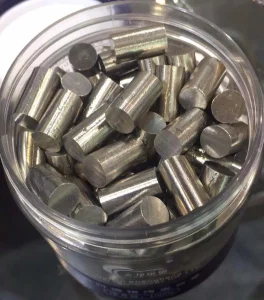
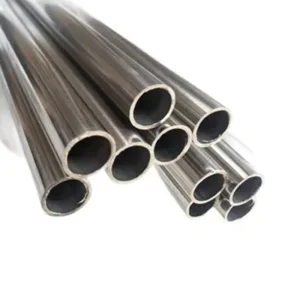
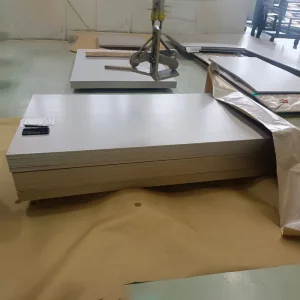
Hangzhou Retra Medical Co., Ltd. is a leading manufacturer of high-performance medical metals and orthopedic implants, specializing in Medical Titanium, Stainless Steel, CoCrMo, Tantalum, and Nitinol. With a strong commitment to research, development, and precision manufacturing, Retra Medical has become a trusted partner for hospitals, clinics, and medical device companies worldwide.

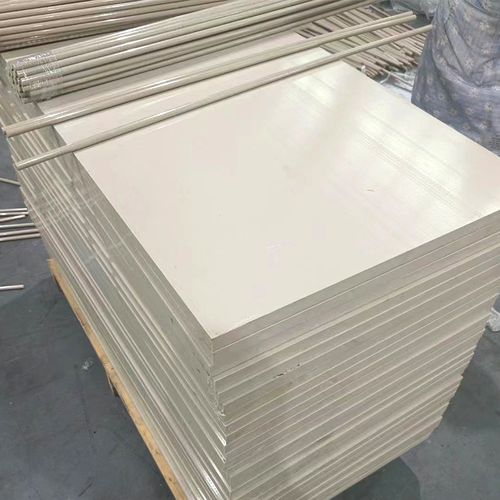
The company offers a comprehensive range of orthopedic and surgical implants, including joint replacement components, spinal systems, trauma plates and screws, maxillofacial reconstruction devices, and custom implant solutions. All products are manufactured using surgical-grade metals that ensure biocompatibility, durability, and corrosion resistance, meeting the stringent standards of the global healthcare industry.
Retra Medical emphasizes innovation and quality control, combining advanced production techniques with rigorous testing to ensure every implant delivers reliable performance and patient safety. The company also provides customized solutions tailored to specific clinical needs, supporting minimally invasive surgery, complex trauma repair, and long-term implant success.
Guided by the principles of "quality first, innovation-driven, customer-oriented," Hangzhou Retra Medical has earned an excellent reputation both domestically and internationally. With a dedicated R&D team, modern production facilities, and professional after-sales support, the company continues to advance the orthopedic and surgical implant industry, providing safe, high-quality, and reliable solutions that improve patient outcomes and support healthcare innovation worldwide.
Understanding the biomechanical parameters, mesh porosity geometry, and electrochemical anodization required for permanent CMF reconstruction.
Maxillofacial titanium meshes are crafted primarily from Commercially Pure Titanium Grade 2 (ASTM F67) or Titanium Alloy Ti-6Al-4V ELI (Extra Low Interstitial - ASTM F136). Grade 2 provides unmatched intraoperative ductility, allowing surgeons to manually contour the mesh to intricate facial contours (orbital rim, zygomatic arch) without springback. Grade 5 ELI offers elevated tensile strength (≥ 860 MPa) ideal for load-bearing mandibular reconstruction plates and heavy trauma bridging.
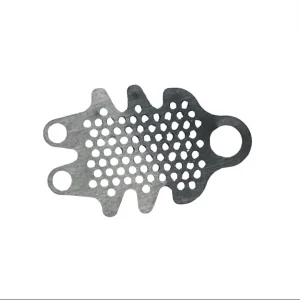
Modern Chinese exporters utilize precision laser micro-perforation and photochemical etching to create uniform pore matrix designs (hexagonal, diamond, or circular shapes ranging from 0.8mm to 2.5mm). Optimal porosity (60%–78%) promotes vascularization and osteoblast migration while preventing soft tissue ingrowth into bone cavities. Controlled pore edge rounding eliminates sharp stress concentration points.
To eliminate passive oxide layer inconsistencies, premium meshes undergo Type II Anodization (grey/matte surface) or Type III Anodization (color-coded thickness identification: blue, pink, gold). Anodization thickens the protective titanium dioxide (TiO₂) layer up to 200 nm, providing exceptional corrosion resistance in bodily fluids, minimizing ion release, and reducing bacterial adhesion rates.
| Material Parameter | CP Titanium Grade 2 (ASTM F67) | Ti-6Al-4V ELI Grade 5 (ASTM F136) | PEEK (Polyetheretherketone) |
|---|---|---|---|
| Tensile Strength (MPa) | ≥ 345 MPa | ≥ 860 MPa | 90 - 100 MPa |
| Yield Strength (MPa) | ≥ 275 MPa | ≥ 795 MPa | 110 MPa |
| Elongation at Break (%) | ≥ 20% (High Intraoperative Bending) | ≥ 10% (Moderate Flexibility) | 5% - 10% |
| Young’s Modulus (GPa) | 105 GPa (Close to cortical bone) | 110 GPa | 3.6 GPa |
| Artifacts on CT / MRI | Minimal Streak Artifacts | Low-to-Moderate Artifacts | Zero Metallic Artifacts |
| Clinical Indications | Orbital floor, Cranial vault, Midface trauma | Mandibular load-bearing, Segmental defects | Custom patient-specific cranial caps |
Comprehensive anatomical solutions tailored for craniomaxillofacial trauma, tumor resection reconstruction, and guided bone augmentation.
Traumatic orbital blow-out fractures demand ultra-thin (0.2mm - 0.4mm), pre-shaped titanium mesh to restore orbital volume, prevent enophthalmos, and support ocular globe alignment without tissue impingement.
Oncological resections often leave extensive bone gaps. Heavy-duty titanium 3D mesh plates combined with autologous bone grafts or vascularized free fibula flaps bridge defect zones while resisting masticatory shear forces.
Large cranial defects following decompressive craniectomy require 3D anatomical contouring. Custom titanium mesh plates derived from patient CT data ensure symmetrical aesthetics and cranial protection.
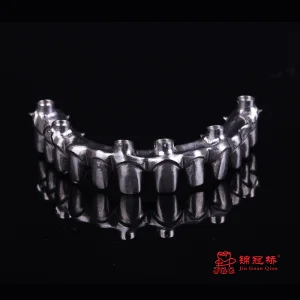
In complex dental implantology, micro-titanium meshes act as space-maintaining barriers, containing particulate bone grafts in severe alveolar ridge augmentations prior to dental implant fixture placement.
Key quality control criteria, factory audit protocols, and technological advances in Chinese medical device manufacturing.
Top Chinese exporters have integrated Selective Laser Melting (SLM) and Electron Beam Melting (EBM) 3D printing technologies directly with 3D DICOM medical imagery. This permits rapid production of Patient-Specific Implants (PSI) within 48 to 72 hours, reducing surgical operation time by up to 40% and minimizing intraoperative mesh bending errors.
Leading factories deploy 5-axis CNC machining, vision-measuring systems, and dynamic mechanical testing rigs conforming to ASTM F2068 protocols. Every batch undergoes 5 million cycle fatigue tests, tensile micro-crack inspection, and ICP-MS elemental chemical analysis to ensure zero heavy metal contamination.
Medical device exporters deliver products packaged in ISO Class 7 (Class 10,000) cleanrooms using double-peelable Tyvec packaging. Products are supplied either pre-sterilized via Gamma Radiation / EtO or validated for autoclave steam sterilization cycles at healthcare facilities.
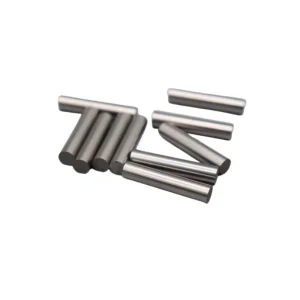
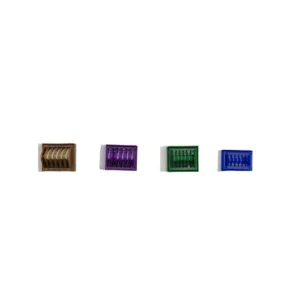
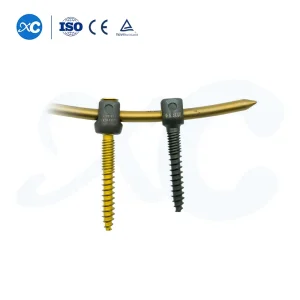
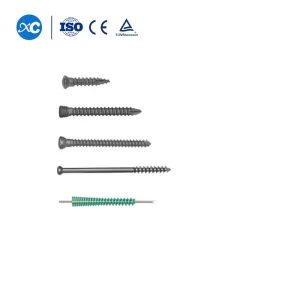
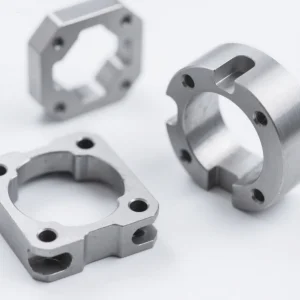
Explore spinal implants, dental components, high-precision biocompatible rods, and surgical clip appliers manufactured to exact OEM specifications.
Expert answers addressing material selection, surgical customisation, quality assurance, and export logistics.
Maxillofacial titanium mesh thickness varies depending on the anatomical repair site. Ultra-thin orbital floor meshes range from 0.2mm to 0.4mm for minimal orbital contour disruption. Midface and trauma plates range from 0.5mm to 1.0mm, while heavy mandibular reconstruction plates range from 1.5mm to 2.8mm to withstand cyclic chewing forces.
CP Titanium Grade 2 (ASTM F67) exhibits lower tensile strength but superior elongation properties compared to Ti-6Al-4V Grade 5. This allows trauma surgeons to contour, cut, and bend the titanium mesh intraoperatively with specialized mesh pliers without inducing micro-fractures or structural memory recoil.
The OEM client or hospital provides raw DICOM CT scan data. Chinese engineering teams convert CT files into 3D STL CAD models, design the custom titanium mesh contour, receive surgeon approval, and print the mesh via Selective Laser Melting (SLM). The lead time typically ranges between 3 to 7 business days.
Global medical importers must verify that the Chinese manufacturer maintains ISO 13485 (Medical Devices Quality Management System), ISO 14644 (Cleanroom Standards), NMPA Class III registration, and international compliance such as CE Marking under MDR 2017/745 or FDA 510(k) clearance.
Most Chinese exporters like Hangzhou Retra Medical Co., Ltd. offer flexible MOQ terms for global B2B distributors. Standard mesh profiles feature low MOQs (10-50 units), while full OEM branding—including custom laser markings, customized tray packaging, and specialized screw kit pairings—is available for larger contract orders.
Looking for reliable OEM/ODM medical grade titanium mesh, cranial plates, or custom 3D surgical components? Connect directly with our engineering team for technical consultations, material test certificates, and wholesale pricing.
Request Technical Specifications & Factory Quote Retra Medical