Explore our premium surgical-grade implants, high-performance cobalt-nickel alloys, and advanced titanium components built for global medical compliance.
Understanding Phase Transformations, Superelasticity, and Mechanical Attributes of Ni-Ti Alloys.
The mechanical performance of Shape-Memory Nitinol (Nickel-Titanium) wires depends on thermal-induced or stress-induced crystalline phase transformations. At high temperatures, Nitinol exists in its parent Austenite phase (B2 cubic structure), exhibiting high stiffness and modulus. Upon cooling below a critical threshold, it transitions to the Martensite phase (B19' monoclinic structure), which is highly twinable and easily deformed. Control of the Active Austenite Finish temperature (Af) determines whether the wire behaves with shape-memory properties or superelastic characteristics at room or body temperature.
Nitinol wires for clinical implants require strict chemical uniformity, as defined by the ASTM F2063 standard. Surface treatments are critical to building a passivated, protective titanium dioxide (TiO2) layer. This oxide layer prevents nickel ions from leaching into biological tissues, ensuring biocompatibility. The corrosion resistance is further enhanced via specialized pickling, mechanical polishing, and electropolishing, achieving a stable surface configuration necessary for long-term orthotic and vascular implants.
| Property Designation | Austenitic Nitinol (Superelastic) | Martensitic Nitinol (Shape Memory) | Standard Reference |
|---|---|---|---|
| Nominal Composition | 54.5 - 57.0 wt% Ni, Balance Ti | 54.5 - 57.0 wt% Ni, Balance Ti | ASTM F2063 / ISO 5832-10 |
| Transformation Temp (Af) | -15°C to 15°C (Body Temp Active) | 20°C to 95°C (Heat Activated) | ASTM F2082 (Active Af by Bend/Recovery) |
| Ultimate Tensile Strength (UTS) | ≥ 1000 MPa (Work Hardened / Aged) | ≥ 800 MPa (Annealed state) | ASTM F2516 (Tensile Testing) |
| Upper Plateau Strength (UPS) | ≥ 380 MPa (at 3% Strain) | Not Applicable (Deforms Plastically) | ASTM F2516 |
| Permanent Set / Residual Strain | ≤ 0.5% after 6% Strain cycle | Fully recoverable upon heating | ASTM F2516 / ASTM F2004 |
| Surface Finish Options | Electropolished (EP), Pickled, Black Oxide | Etched, Oxide-free, Custom Oxide coated | ISO 10993 (Biocompatibility Evaluation) |
How Modern China-Based Factories Execute Precision Shape Setting and Wire Drawing.
Quality begins with raw material composition. Chinese factories employ Vacuum Induction Melting (VIM) coupled with Vacuum Arc Remelting (VAR) to minimize impurities. Controlling inclusions (such as carbides and oxides) is critical to preventing fatigue initiation sites in clinical stents and dynamic endodontic instruments.
Using diamond drawing dies, ingots are reduced to fine micro-wires. Intermediate annealing steps relieve processing stress. In-line laser diameter gauges monitor dimensional tolerances down to ±0.002 mm, satisfying strict requirements for neurovascular access and guidewires.
Shape memory properties are set using heat treatments (typically 450°C to 550°C) while holding the wire in a configured geometry. Salt baths or fluidized beds provide the uniform heat transfer required to lock in the target transition temperature profile without degrading mechanical integrity.

Hangzhou Retra Medical Co., Ltd. is a leading manufacturer of high-performance medical metals and orthopedic implants, specializing in Medical Titanium, Stainless Steel, CoCrMo, Tantalum, and Nitinol. With a strong commitment to research, development, and precision manufacturing, Retra Medical has become a trusted partner for hospitals, clinics, and medical device companies worldwide.
Our infrastructure supports end-to-end processing of advanced biomaterials, ensuring mechanical consistency and dimensional precision. By integrating metallurgical expertise with modern CNC machining and shape-setting lines, we bridge the gap between custom development and volume production.
Analyzing usage across modern medical devices, aerospace actuators, and surgical components.
Nitinol wires serve as the structural backbone for self-expanding cardiovascular stents, heart valves, and diagnostic guidewires. The superelastic properties allow these devices to navigate tortuous vascular pathways, recovering their intended diameter at 37°C inside target vessels.
Used in dental archwires, Nitinol delivers light, continuous forces over an extended range of deflection. This steady force profile promotes efficient tooth movement, minimizing patient discomfort compared to traditional stainless steel wires that require frequent adjustments.
In trauma recovery and spinal correction, Nitinol staples and rods respond to temperature changes or continuous biomechanical stress, applying dynamic compression to bone fractures and promoting faster osseointegration.
Stone retrieval baskets and flexible biopsy instruments leverage Nitinol's kink resistance. Even when sharply bent during minimally invasive procedures, the wire returns to its original configuration without permanent deformation.
Beyond clinical medicine, Nitinol wire acts as a solid-state actuator. By passing an electrical current through the wire, resistive heating triggers the transition to the Austenite phase, creating high contraction forces suitable for space mechanisms and micro-valves.
Micro-fine Nitinol wires are integrated into advanced smart fabrics, enabling variable-tension sports equipment, shape-adapting safety gear, and wearable sensory feedback systems for extreme environments.
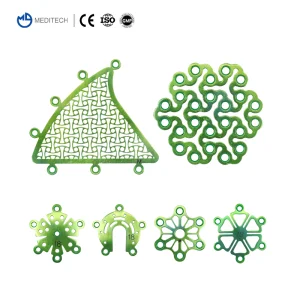
The company offers a comprehensive range of orthopedic and surgical implants, including joint replacement components, spinal systems, trauma plates and screws, maxillofacial reconstruction devices, and custom implant solutions. All products are manufactured using surgical-grade metals that ensure biocompatibility, durability, and corrosion resistance, meeting the stringent standards of the global healthcare industry.
Our raw materials, including Nitinol wires, target key performance metrics: high fatigue resistance, controlled phase-transformation hysteresis, and clean surface finishes. This focus helps surgical systems perform reliably over long-term implant cycles.
How local industrial integration, raw material access, and testing systems guarantee delivery.
China's shape-memory alloy sector features fully integrated ecosystems. From smelting raw titanium and nickel under high-vacuum conditions to cold drawing, thermal shape-setting, and final polishing, all steps are managed within local clusters, minimizing transit delays and keeping costs competitive.
We use Differential Scanning Calorimetry (DSC) per ASTM F2004 to confirm phase transition points on every batch. High-cycle fatigue testers verify structural integrity, confirming that medical component wire batches withstand millions of cycles under stress-induced martensite phases.
Our manufacturing practices align with ISO 13485 and ISO 9001 quality systems. We provide material test reports (MTRs), chemical analyses, and compliance documents for our medical alloys, facilitating FDA, CE, and local regulatory approval processes.
Retra Medical emphasizes innovation and quality control, combining advanced production techniques with rigorous testing to ensure every implant delivers reliable performance and patient safety. The company also provides customized solutions tailored to specific clinical needs, supporting minimally invasive surgery, complex trauma repair, and long-term implant success.
By investing in R&D, our material scientists optimize transformation hysteresis and structural response, allowing clinicians to perform complex interventions with confidence in the material's performance.
Guided by the principles of "quality first, innovation-driven, customer-oriented," Hangzhou Retra Medical has earned an excellent reputation both domestically and internationally. With a dedicated R&D team, modern production facilities, and professional after-sales support, the company continues to advance the orthopedic and surgical implant industry, providing safe, high-quality, and reliable solutions that improve patient outcomes and support healthcare innovation worldwide.
Essential guidance for design engineers and raw material procurement specialists.
The difference lies in the active Austenite finish temperature (Af). Superelastic Nitinol has an Af below room or body temperature. Under stress, the B2 austenite crystal transforms to stress-induced martensite (SIM), recovering its shape instantly when unloaded. Shape-memory Nitinol has an Af above room temperature, allowing it to remain deformed at ambient temperature until heat is applied to trigger recovery.
ASTM F2063 specifies the precise chemical composition and microstructure limits for wrought nickel-titanium shape memory alloys used in surgical implants and medical devices. It enforces strict limits on carbon, oxygen, nitrogen, and hydrogen to avoid embrittlement and ensures the alloy remains biocompatible and resistant to in-vivo fatigue.
The active Af temperature defines the thermal threshold where the shape recovery process completes. For instance, in self-expanding stents, the active Af is set slightly below body temperature (around 25°C to 32°C) so that the device stays rigid and fully expanded once deployed in the body.
Electropolishing (EP) is the industry standard for implantable devices because it creates a smooth, micro-polished surface and forms a robust, passive titanium oxide (TiO2) layer. This oxide layer enhances corrosion resistance and prevents nickel release. Other options include chemical etching (pickling) and oxide-free mechanical wire brushing.
We use rotary beam fatigue testing or tension-tension fatigue tests (ASTM F2516) to verify fatigue limits. By cycling the wire through its stress-induced phase transformations at a range of amplitudes, we confirm that our products meet the long-term fatigue requirements of endodontic and orthopedic implants.
Every shipment includes a comprehensive Material Test Report (MTR). This document details the raw chemical composition, active Af temperature (measured by DSC or bend-and-recovery), tensile properties, surface condition, and compliance certifications for ASTM F2063.
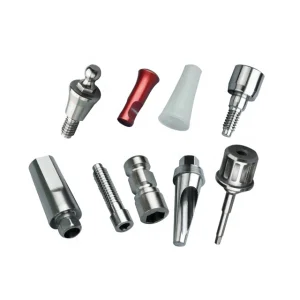
Review our specialized medical components, titanium bars, and dental cobalt-chromium alloys built to demanding international standards.
 Retra Medical