The global cardiovascular device market is undergoing an unprecedented evolution driven by aging demographics, rising incidences of ischemic heart disease, peripheral arterial disease (PAD), and structural heart pathologies. As interventional cardiology moves toward minimally invasive transcatheter procedures, Nitinol (Nickel-Titanium shape memory alloy) has established itself as the indispensable foundation for advanced cardiovascular stents, structural heart frames, and neurovascular flow diverters.
Vascular diseases remain the leading cause of mortality globally. Interventional cardiologists increasingly require self-expanding Nitinol stents with superior radial strength, low crimp profiles, and exceptional kink resistance to treat complex bifurcations and highly calcified lesions.
Modern Chinese stent manufacturing leverages high-precision femtosecond and picosecond laser cutting, maintaining thermal affected zones (HAZ) near zero. This ensures pristine grain boundary integrity and minimizes micro-crack initiation during high-strain cyclic flexing.
Global medical device distributors demand full compliance with ISO 13485:2016, US FDA 510(k) / PMA guidelines, and European CE MDR (EU 2017/745). Chinese tier-1 factories lead in standardized quality system transparency and batch-level metallurgical traceability.
Nitinol is an equiatomic shape memory alloy comprising approximately 55.8 wt% Nickel and Titanium balance. Its extraordinary utility in cardiovascular implants stems from two distinct phenomenon: Thermal Shape Memory Effect and Stress-Induced Superelasticity. Understanding these mechanics is essential for OEM procurement engineers when selecting stent manufacturing partners.
At physiological body temperature (37°C), medical-grade Nitinol resides in its parent Austenite phase (B2 cubic crystal structure). When delivered via a micro-catheter, stress induces a transformation to stress-induced Martensite (B19' monoclinic structure), allowing the stent to deform up to 8–10% strain without permanent plastic deformation. Upon deployment from the sheath, the stress is relieved, and the stent instantaneously snaps back to its pre-programmed shape.
The transformation temperature of Nitinol is extraordinarily sensitive; a 0.1% shift in Nickel composition alters the transformation temperature by up to 10°C. Leading Chinese manufacturers utilize Differential Scanning Calorimetry (DSC) and bend and free recovery (BFR) testing under ASTM F2082 to guarantee active $A_f$ temperatures precisely tuned between 15°C and 30°C for optimal self-expansion inside human blood vessels.
Cardiovascular stents endure over 40 million heartbeats annually (~400 million cycles over 10 years). Superior fatigue resistance requires automated chemical and electrochemical polishing that removes surface micro-burrs and grows a uniform, ultra-clean Titanium Dioxide ($\text{TiO}_2$) passivation layer (>20 nm) compliant with ASTM F2063 standards, preventing Nickel ion elution and thrombus formation.
| Material Spec | Primary Crystal Phase | Tensile Strength (MPa) | Max Elastic Strain (%) | Biocompatibility Index | Target Clinical Applications |
|---|---|---|---|---|---|
| Nitinol (ASTM F2063) | B2 Austenite / B19' Martensite | 850 - 1200 | 8.0 - 10.0% | Exceptional (TiO2 Passivated) | Self-Expanding Stents, Heart Valve Frames, Neuro diverters |
| Titanium Gr5 / TC4 (ASTM F136) | Alpha-Beta Phase Structure | 860 - 960 | 0.8 - 1.2% | Outstanding (Direct Bone Bonding) | Trauma Plates, Pedicle Screws, Dental Implants |
| CoCrMo Alloy (ASTM F75/F90) | Cobalt-Chromium Matrix | 900 - 1450 | 0.5 - 0.9% | High Wear Resistance | Balloon-Expandable Stents, Prosthetic Joint Bearings |
| 316LVM Stainless Steel (ASTM F138) | Austenitic Non-Magnetic | 620 - 1000 | 0.5% | Standard Medical Grade | Fracture Fixation Tubes, Catheter Structural Wire |
| Pure Tantalum Ta1 (ASTM F560) | Body-Centered Cubic (BCC) | 300 - 550 | 1.5 - 2.5% | Extreme Inertness & Radiopacity | Radiopaque Stent Markers, Bone Scaffold Coatings |
China's rise as a global hub for medical device component manufacturing is powered by end-to-end supply chain integration, advanced robotics, digital twin quality controls, and unmatched cost-performance efficiency.
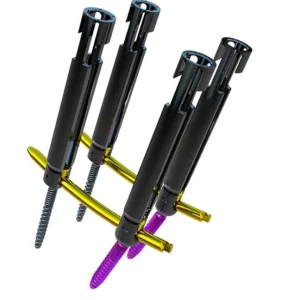
Hangzhou Retra Medical Co., Ltd. is a leading manufacturer of high-performance medical metals and orthopedic implants, specializing in Medical Titanium, Stainless Steel, CoCrMo, Tantalum, and Nitinol. With a strong commitment to research, development, and precision manufacturing, Retra Medical has become a trusted partner for hospitals, clinics, and medical device companies worldwide.
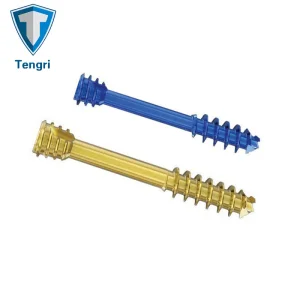
The company offers a comprehensive range of orthopedic and surgical implants, including joint replacement components, spinal systems, trauma plates and screws, maxillofacial reconstruction devices, and custom implant solutions. All products are manufactured using surgical-grade metals that ensure biocompatibility, durability, and corrosion resistance, meeting the stringent standards of the global healthcare industry.
Retra Medical emphasizes innovation and quality control, combining advanced production techniques with rigorous testing to ensure every implant delivers reliable performance and patient safety. The company also provides customized solutions tailored to specific clinical needs, supporting minimally invasive surgery, complex trauma repair, and long-term implant success.
Guided by the principles of "quality first, innovation-driven, customer-oriented," Hangzhou Retra Medical has earned an excellent reputation both domestically and internationally. With a dedicated R&D team, modern production facilities, and professional after-sales support, the company continues to advance the orthopedic and surgical implant industry, providing safe, high-quality, and reliable solutions that improve patient outcomes and support healthcare innovation worldwide.

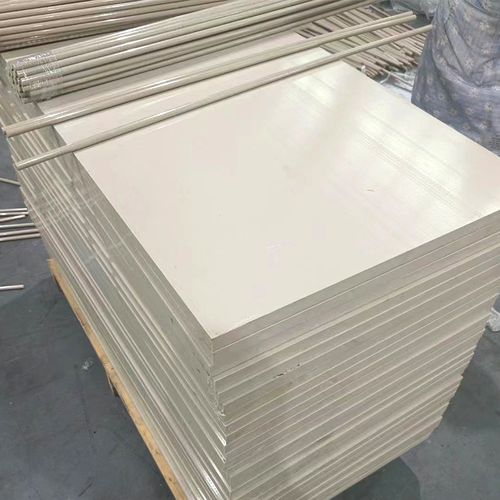
Quality starts at the ingot. Tier-1 Chinese suppliers utilize Vacuum Arc Remelting (VAR) or Electron Beam Melting (EBM) to minimize non-metallic inclusions (oxides, carbides). ASTM F2063 dictates ultra-low oxygen and carbon content to prevent micro-structural fatigue notches.
Precision seamless Nitinol tubing (OD 0.5mm to 10.0mm) undergoes multi-stage expansion using precision titanium alloy shape-setting mandrels in fluidized salt baths or vacuum ovens, fixing the expanded radial geometry prior to electro-polishing.
Leading factories employ automated 3D non-contact optical inspection systems to measure strut thickness, crown radiuses, and surface integrity. Radial Force Testing (RFD/RCF) guarantees uniform outward vessel pressure.
Nitinol's elastic compliance closely matches human physiological soft tissue behavior, reducing stress shielding and vessel trauma across diverse surgical domains.
Self-expanding Nitinol stents excel in the Superficial Femoral Artery (SFA) and Popliteal segments, where external muscular compression, bending, and torsion destroy rigid balloon-expandable stainless steel stents. Nitinol instantly rebounds after physical crushing.
Ultra-thin wall Nitinol tubing (wall thickness <40 microns) enables ultra-flexible neurovascular flow diverters capable of navigating tortuous cerebral arteries to treat intracranial aneurysms safely.
Transcatheter Aortic Valve Replacement (TAVR) systems rely on large-diameter Nitinol mesh frames that collapse inside an 14F–18F delivery sheath and expand autonomously inside the calcified native valve annulus.
Cobalt-Chromium (CoCr) is ideal for balloon-expandable coronary stents due to its high elastic modulus and radiopacity. However, in peripheral arteries like the Superficial Femoral Artery (SFA), the vessel undergoes heavy musculoskeletal twisting and external pinching. Nitinol's superelasticity allows it to undergo severe crushing strain without plastic deformation, restoring original vessel lumen diameter instantly once pressure drops.
Unpassivated Nickel can cause cytotoxic reactions. Retra Medical utilizes precise electrochemical polishing and controlled thermal oxidation. This process grows an impermeable Titanium Oxide (TiO2) layer over the exterior Nitinol micro-struts while stripping away surface Nickel atoms, meeting stringent ISO 10993 cytotoxicity, sensitization, and systemic toxicity guidelines.
Utilizing ultra-fast femtosecond laser micro-cutting systems, advanced Chinese OEM factories achieve structural wall tolerances down to ±0.005 mm (5 microns). Edge radius deburring and micro-polishing ensure strut cross-sections are smooth, preventing localized endothelial shear stress and neo-intimal hyperplasia.
The Active Austenitic Finish ($A_f$) temperature determines the precise thermal threshold where the material completes its phase transition to full superelastic Austenite. If $A_f$ is set too high (above 37°C), the stent will remain soft/martensitic inside the body and fail to exert adequate Radial Resistive Force (RRF). Standard vascular Nitinol stents target an $A_f$ between 20°C and 30°C.
Cardiovascular assembly requires integrated bio-compatible metals, including Tantalum markers (for high fluoroscopic radiopacity under X-ray), Titanium (TC4/Gr5) handle connector components, CoCr retention wires, and 316LVM stainless steel braided catheter shafts.
 Retra Medical