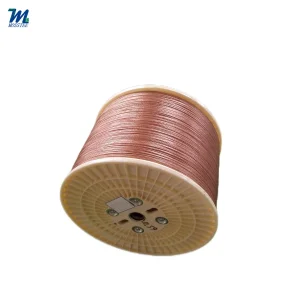
Introduction to Al-Ti-C Al-Ti-C intermediate alloy
Stable production of Al-Ti-C alloy with good decay resistance and consistent performance is now achievable. The refining effect is comparable to leading international standards. Common alloy compositions include Al-5Ti-(0.1~0.5)C, Al-4Ti-(0.1~0.4)C, and Al-3Ti-(0.1~0.3)C. Extensive testing confirms that Al-Ti-C alloy eliminates columnar twins and crystals in aluminum plate and foil, ensuring dense, fine, and uniform grains. This overcomes defects like cracks, surface peeling, and segregation, significantly improving strength and toughness.
1
Al-Ti-C is less likely to produce salt inclusions as it does not use potassium fluoborate as a raw material.
2
Unlike Al-Ti-B, where TiB2 clusters can cause defects like axis stripes or perforations, Al-Ti-C features submicron TiC particles that disperse easily and do not aggregate.
3
Al-Ti-C alloys are resistant to "poisoning" effects caused by Zr and Cr in certain aluminum alloys.
4
The nucleation rate is 5 times higher than Al-Ti-B, providing a remarkable refining effect within just 2 minutes of addition.
5
Introduces fewer hard points into the melt, improving the quality of foils and PS plates.
6
Ideal for boron-free aluminum production in the nuclear industry.
7
Improves mechanical properties and elongation in A356 aluminum alloy hubs compared to Al-Ti-B.
The application method for Al-Ti-C (amount, location, temperature) is similar to Al-Ti-B. For optimal results, it is recommended to reduce the aluminum liquid temperature in the shunt tank. Successful production tests have been conducted at temperatures as low as 670 degrees Celsius without casting issues.
Historically, TiC was identified for grain refining in the 1940s, but stable production was elusive for decades. This led researchers toward Al-Ti-B (Al-5Ti-1B, etc.). However, recent advancements have stabilized the Al-Ti-C production process and clarified its refining mechanism. Today, Al-Ti-C intermediate alloys provide superior grain refinement for the 1000 through 8000 series alloys, entering the aluminum processing industry as a high-quality, energy-saving, and pollution-free alternative.
Frequently Asked Questions
What are the primary benefits of using Al-Ti-C over Al-Ti-B?
Al-Ti-C offers a higher nucleation rate (5x), prevents salt inclusions, avoids TiB2 clustering defects, and is not "poisoned" by Zr or Cr elements in the alloy.
How quickly does the grain refining effect occur?
The ideal metamorphic and refining effect can be achieved within approximately 2 minutes after adding the Al-Ti-C master alloy to the melt.
Can Al-Ti-C be used in the nuclear industry?
Yes, it is highly advantageous for producing boron-free aluminum, which is a requirement for many applications in the nuclear industry.
What is the recommended minimum temperature for casting?
Production tests have shown that Al-Ti-C performs effectively at melt temperatures as low as 670 degrees Celsius without causing casting problems.
Does Al-Ti-C improve the quality of aluminum foil?
Yes, by introducing fewer hard points and preventing aggregate inclusions, it significantly reduces perforations and surface defects in double-zero foils.
Is the production process for Al-Ti-C environmentally friendly?
Yes, the production process is pollution-free and is considered a typical energy-saving and emission-reduction product.