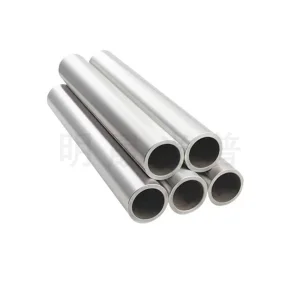
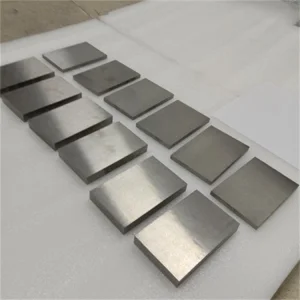
Explore our foundational selection of high-performance components, materials, and clinical instrumentation engineered to meet strict international medical standards.
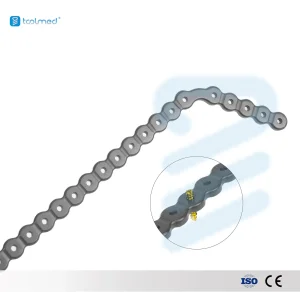
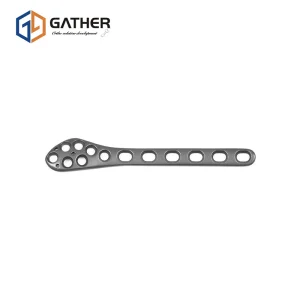
While modern implantology highlights the rise of titanium alloys, surgical-grade stainless steel (specifically ASTM F138 and ASTM F139 316LVM) remains irreplaceable in global osteosynthesis. The reasons lie deep within material mechanics. Stainless steel exhibits a unique combination of high yield strength, superior ultimate tensile strength, and excellent ductility, allowing orthopedic surgeons to contour and shape fracture fixation plates intraoperatively without introducing micro-cracks or catastrophic structural failures.
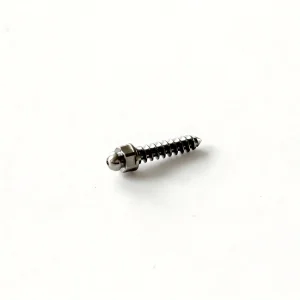
Unlike titanium, which has a higher risk of cold welding (galling) when thread interfaces interact under immense mechanical loads, stainless steel screws maintain thread integrity throughout long-term dynamic loading. The vacuum-arc remelt (VAR) process utilized in creating 316LVM minimizes non-metallic inclusions, ensuring an exceptionally clean microstructural matrix. This level of purity dramatically reduces the risk of localized corrosion, pitting, and fatigue failure in the demanding biological environment of the human body.
Additionally, stainless steel maintains a higher modulus of elasticity, preventing excessive micro-motion at the fracture site when structural rigidity is the primary clinical objective. This is particularly crucial in multi-fragmentary diaphyseal fractures where anatomical realignment depends on absolute stability.
Bridging the gap between advanced metallurgic science and high-volume clinical demands.
Hangzhou Retra Medical Co., Ltd. is a leading manufacturer of high-performance medical metals and orthopedic implants, specializing in Medical Titanium, Stainless Steel, CoCrMo, Tantalum, and Nitinol. With a strong commitment to research, development, and precision manufacturing, Retra Medical has become a trusted partner for hospitals, clinics, and medical device companies worldwide.
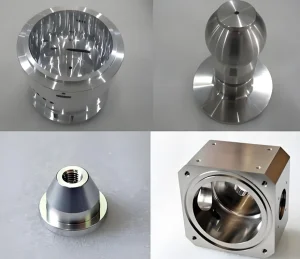
Our facility leverages state-of-the-art multi-axis CNC machines and automated Swiss-type lathes to ensure that every screw thread profile, drive recess, and cannula inner diameter aligns with the tightest tolerances required in surgical settings. Through rigorous metallurgy analysis, we ensure that raw inputs conform to global standards, ensuring biocompatibility and biomechanical confidence.
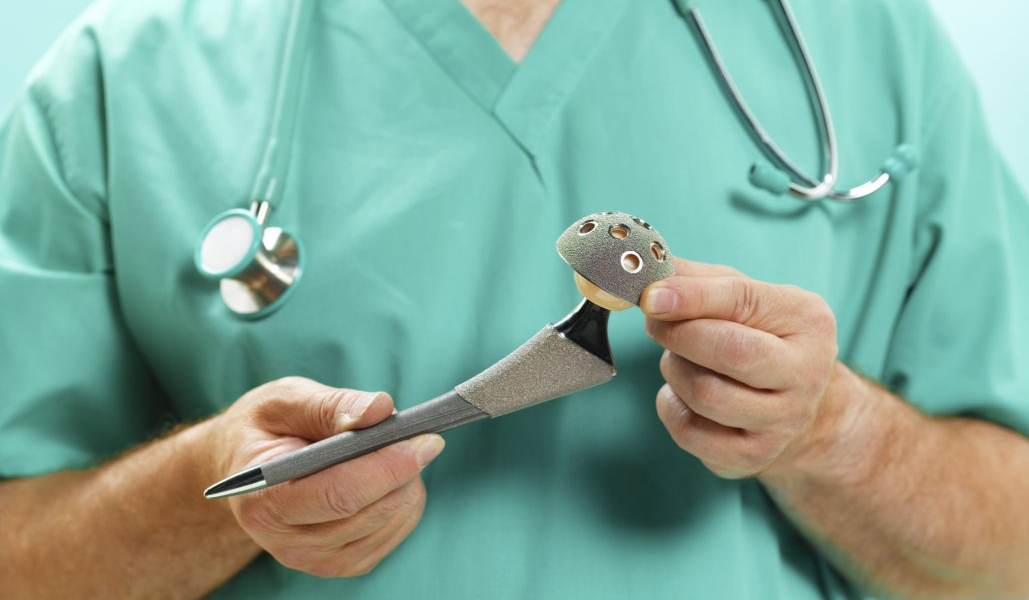
"Quality is not an inspection metric; it is designed and engineered into every grain boundaries of our orthopedic metals." - Retra Medical Quality Directorate.
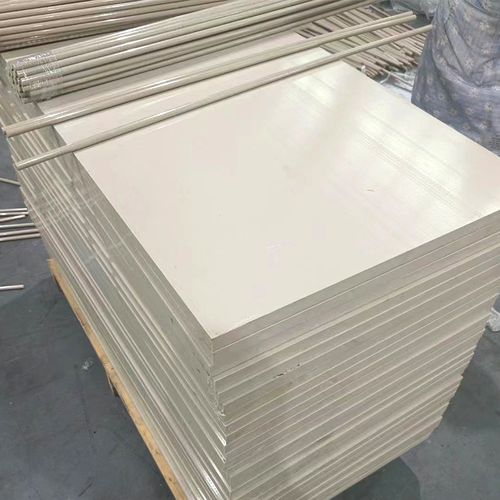
The company offers a comprehensive range of orthopedic and surgical implants, including joint replacement components, spinal systems, trauma plates and screws, maxillofacial reconstruction devices, and custom implant solutions. All products are manufactured using surgical-grade metals that ensure biocompatibility, durability, and corrosion resistance, meeting the stringent standards of the global healthcare industry.
By emphasizing innovation and quality control, combining advanced production techniques with rigorous testing, we ensure every implant delivers reliable performance and patient safety. The company also provides customized solutions tailored to specific clinical needs, supporting minimally invasive surgery, complex trauma repair, and long-term implant success.
Guided by the principles of "quality first, innovation-driven, customer-oriented," Hangzhou Retra Medical has earned an excellent reputation both domestically and internationally. With a dedicated R&D team, modern production facilities, and professional after-sales support, the company continues to advance the orthopedic and surgical implant industry, providing safe, high-quality, and reliable solutions that improve patient outcomes and support healthcare innovation worldwide.
The global medical device market has shifted from a model focused purely on lowest cost to one demanding high resilience, quality assurance, and supply chain continuity. As leading exporters, Chinese medical manufacturing hubs have undergone a technological evolution, moving into "Factory 4.0" paradigms. This shift combines high-speed precision manufacturing with artificial intelligence-driven quality monitoring, optical inspection, and complete lot traceability from melt to sterile pouch packaging.
By implementing closed-loop manufacturing feedback systems, Retra Medical ensures that the dimensional variability of orthopedic screws—especially in critical zones such as the thread crest-to-root transitions and the drive interface (e.g., Torx/Hex)—remains below 5 microns. This level of precision minimizes intraoperative complication rates, such as stripping of the screw head or cross-threading of the locking plate.
Furthermore, China’s industrial ecosystem provides an unmatched advantage: vertically integrated supply chains. Raw material preparation, precision extrusion, thread rolling, passivating heat treatments, and medical cleanroom packaging are consolidated in advanced industrial clusters. This reduces logistical lead times by up to 40% and provides global buyers with stable pricing, cushioning them against volatile energy and raw material spikes in western markets.
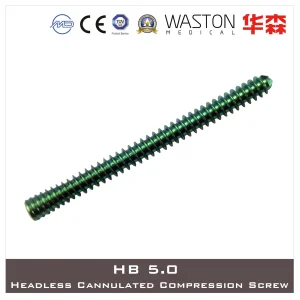
Our manufacturing protocols utilize automated multi-spindle Swiss CNC turning centers that process medical metals in a single clamping phase. This eliminates concentricity deviations between the screw shank and the threaded section, which is critical for cannulated orthopedic screws used in percutaneous osteosynthesis.
Every production run undergoes a documented validation sequence:
| Metal Alloy Type | Tensile Strength (MPa) | Yield Strength (MPa) | Elongation (%) | Primary Clinical Application |
|---|---|---|---|---|
| 316LVM Stainless Steel (ASTM F138) | 860 - 1100 | 690 - 800 | 12 - 20 | Dynamic trauma plates, compression screws, intramedullary pins, pediatric osteotomy. |
| Titanium Grade 5 (Ti-6Al-4V ELI) | 860 - 950 | 790 - 860 | 10 - 15 | Spinal cages, dental implants, long-term joint arthroplasty components. |
| Cobalt-Chromium-Molybdenum (CoCrMo) | 900 - 1050 | 500 - 650 | 8 - 12 | High-wear load articulation surfaces, knee joint prostheses. |
| Nitinol (Nickel-Titanium Alloy) | 800 - 1000 | 100 - 500 (variant) | 15 - 20 | Self-expanding vascular stents, shape-memory surgical staples, orthodontic wires. |
Tailored metallurgical and engineering answers for diverse clinical environments globally.
Emergency trauma centers require highly reliable self-tapping and self-drilling cortical and cancellous screws. The high shear strength of our 316LVM screws prevents intraoperative snapping, ensuring rapid bone compression in life-saving procedures.
Veterinary orthopedics (TPLO and fracture repairs in small animals) requires miniature screw diameters (1.5mm to 2.7mm). Retra Medical provides specialized veterinary-grade alloys that guarantee biological compatibility and fit within compact bone geometries.
Multi-national implant brands contract Retra Medical for OEM and ODM manufacturing of proprietary screw configurations. Our flexible CNC tooling paths support custom thread steps, special drives, and sterile-ready supply chains.
Answering crucial clinical, metallurgical, and supply chain queries to support your technical evaluation.
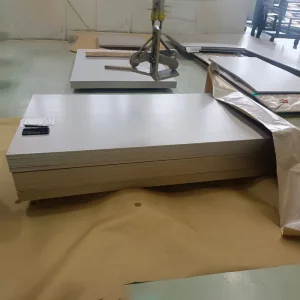
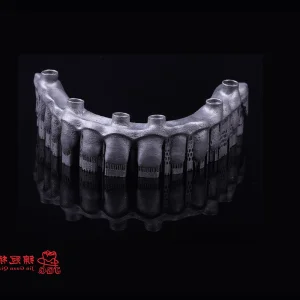
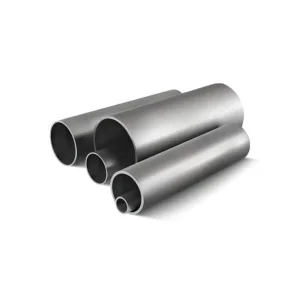
Explore our extended range of clinical-grade metal sheets, structural tubes, and custom dental implant components manufactured to strict international tolerances.

 Retra Medical