Why stainless steel screws are widely used in orthopedics is a question rooted in operating-room realities. Surgeons need fixation devices that are strong, predictable, and familiar. Stainless steel offers high mechanical strength for holding fractured bone in stable alignment. Its stiffness helps resist bending when patients begin controlled movement. That matters beside a tibia, wrist, or small spinal segment.
Orthopedic trauma specialist Dr. Robert W. Bucholz expressed the practical standard clearly: “An implant must provide stable fixation while respecting biology and the patient’s recovery.” This principle explains stainless steel’s continued role. Surgeons can select established screw designs, instruments, and surgical techniques. Hospitals also benefit from broad availability and relatively manageable costs. The polished surface is easy to inspect before implantation. Small threads can grip dense cortical bone securely.
Still, the material is not perfect. It may create imaging artifacts. Some patients can develop sensitivity to nickel-containing alloys. Corrosion and metal debris remain important concerns, especially when implants experience repeated motion. Stainless steel is not always the best choice. Titanium may suit patients needing improved MRI compatibility or reduced stiffness.
The answer depends on context. A surgeon weighs bone quality, fracture pattern, implant position, infection risk, and planned removal. A screw that looks ideal on a tray may perform poorly in weak bone. Careful selection matters more than popularity. This article examines the evidence, clinical experience, and material properties behind stainless steel’s widespread orthopedic use. It also considers where its advantages end.
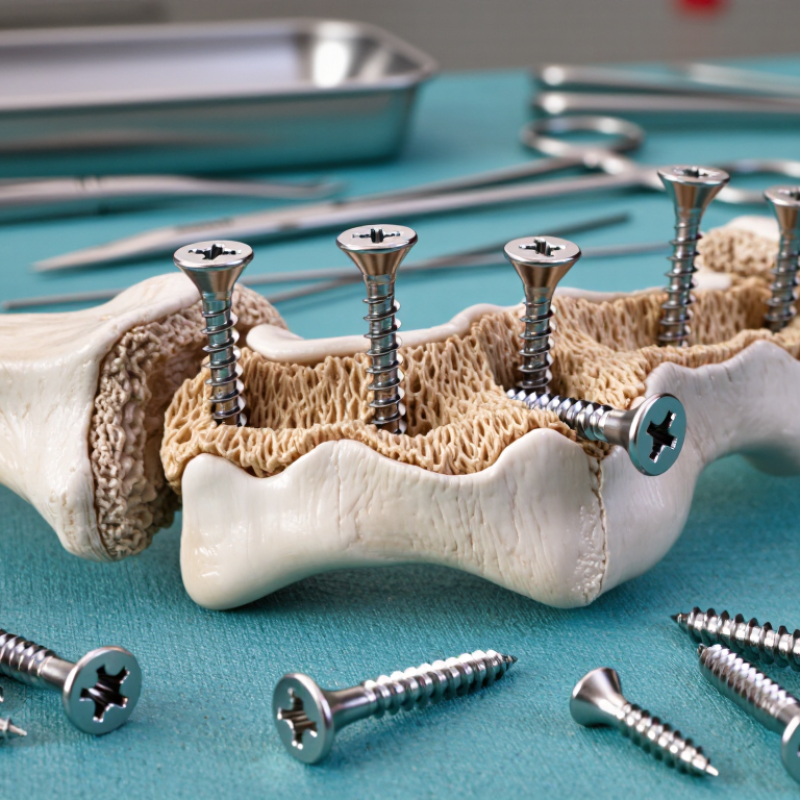
Why Are Stainless Steel Screws Widely Used in Orthopedics?
Stainless steel in orthopedics means a controlled metal alloy, not ordinary steel. Implant-grade 316L stainless steel contains chromium, nickel, and molybdenum. Its low carbon content supports corrosion resistance after passivation. ASTM F138 requires a minimum tensile strength of 860 MPa and elongation of 12%. These figures explain its value in bone plates, screws, wires, and temporary fixation devices. Strength matters when a screw faces bending, tightening, and repeated loading.
The details are more important than the label. ISO 5832-1 describes chemical and mechanical requirements for wrought stainless steel used in surgical implants. Chromium helps form a passive protective film. Molybdenum improves resistance in chloride-rich body fluids. In the operating room, this means a clean, polished screw can tolerate a demanding environment. It is not indestructible. Scratches, contamination, or poor handling may weaken passive protection.
Clinical selection still requires judgment. Nickel sensitivity, imaging artifacts, stiffness mismatch, and long-term corrosion must be considered. Stainless steel may be practical for temporary fixation, while other alloys can suit permanent implantation better. A 2023 market analysis by Fortune Business Insights estimated the global orthopedic devices market at about USD 47 billion in 2022, showing the scale of material decisions across healthcare. Yet market size does not prove clinical superiority. A stronger screw is not automatically the better screw. Performance depends on anatomy, loading, sterilization, and surgical technique. That distinction is easy to overlook.
Why Are Stainless Steel Screws Widely Used in Orthopedics?
Key Properties That Support Bone Fixation
Stainless steel screws support bone fixation through strength, toughness, and reliable mechanical performance. Their high tensile strength helps maintain compression across a fracture. This is important when small movements could delay healing. The material also resists bending during insertion and under everyday loading. That resistance protects the screw threads inside the bone.
Corrosion resistance is another important property. Surgical-grade stainless steel forms a stable protective surface that limits chemical reactions in body fluids. Its established clinical history also supports careful use in orthopedic procedures. In practice, surgeons consider screw diameter, thread design, bone quality, and insertion torque together. The metal alone does not determine fixation success.
Not perfect.
Stainless steel can create imaging artifacts, depending on the alloy and imaging method. It may also be stiffer than bone, which can affect load distribution around the implant. A screw that feels strong during surgery can still loosen in weak or osteoporotic bone. For this reason, precise placement and appropriate postoperative monitoring remain essential. Sterilization, surface condition, and manufacturing quality also influence performance. These details are easy to overlook. Experienced teams review them before selecting a fixation method.
| Key property | Typical value or characteristic | How it supports bone fixation | Clinical or design consideration |
|---|---|---|---|
| Mechanical strength | ASTM F138-type 316L stainless steel has a minimum tensile strength of approximately 515 MPa and a minimum yield strength of approximately 205 MPa in the annealed condition. | Provides resistance to screw bending, deformation, and pullout forces during stabilization. | Actual performance depends on screw diameter, thread geometry, manufacturing condition, bone quality, and loading pattern. |
| Elastic modulus | Approximately 193 GPa for austenitic stainless steel. | The relatively high stiffness helps maintain reduction and alignment under axial and bending loads. | The stiffness is much higher than that of cortical bone, so construct design should avoid excessive stress shielding where relevant. |
| Corrosion resistance | 316L contains at least about 17% chromium and typically 2–3% molybdenum; chromium forms a passive oxide layer that limits corrosion. | Supports long-term stability in the chloride-containing physiological environment. | Surface damage, contamination, crevices, and contact with dissimilar metals can reduce corrosion resistance. |
| Low carbon content | 316L implant-grade stainless steel is generally specified with carbon content not exceeding approximately 0.03%. | Reduces the risk of chromium-carbide precipitation during processing and helps preserve corrosion resistance near welds or heat-affected areas. | Material certification and controlled manufacturing remain important for implant applications. |
| Ductility and toughness | Annealed 316L commonly provides elongation of at least about 40% under ASTM F138 requirements. | Allows the material to tolerate localized stresses and minor deformation without sudden brittle fracture. | Over-tightening, notching, scratches, and repeated loading can still initiate fatigue damage. |
| Fatigue performance | Good fatigue resistance when the screw has an appropriate core diameter, smooth surface finish, and properly formed threads. | Helps withstand repeated cycles caused by walking, muscle activity, and joint movement during healing. | Fatigue life is strongly affected by stress concentration at the thread root and by cyclic loading conditions. |
| Manufacturing precision | Stainless steel can be machined or cold-formed into standardized screw diameters, pitches, thread profiles, and drive recesses. | Accurate threads improve insertion control, purchase in bone, and compatibility with surgical instruments. | Dimensional tolerances, surface finish, and cleanliness should comply with the applicable implant standard and validated process. |
| Biocompatibility history | Implant-grade 316L stainless steel has a long clinical history in bone plates, screws, wires, and other fixation devices. | Extensive clinical experience supports established material selection, testing, and sterilization practices. | Nickel-containing alloys may require careful consideration in patients with documented metal hypersensitivity. |
| Radiographic visibility | Stainless steel is radiopaque and can be readily identified on standard X-ray imaging. | Facilitates assessment of screw position, fracture alignment, and construct integrity after surgery. | Metal may create imaging artifacts, particularly in CT or MRI, depending on implant geometry and imaging parameters. |
| Sterilization compatibility | Stainless steel tolerates commonly used validated hospital sterilization methods, including steam sterilization, when the device and instructions permit it. | Supports safe preparation for implantation without loss of the alloy's essential mechanical properties. | Sterilization parameters must follow the device-specific validated instructions; repeated processing may affect instruments and packaging. |
| Cost and availability | Stainless steel is widely produced, standardized, and generally less costly than many high-performance implant alloys. | Enables broad access to reliable fixation hardware and established instrument systems. | Material selection should still reflect anatomical site, expected loading, MRI requirements, allergy history, and the possibility of future implant removal. |
Note: Values shown are representative characteristics of implant-grade 316L stainless steel and may vary with product specification, processing condition, geometry, and applicable medical-device standards.
Why Are Stainless Steel Screws Widely Used in Orthopedics?
Common Orthopedic Uses of Stainless Steel Screws
Stainless steel screws are frequently selected for trauma fixation because they combine strength, toughness, and reliable corrosion resistance. The International Osteoporosis Foundation reports about 8.9 million fragility fractures worldwide each year. Many require stable fixation during bone healing. A screw can compress a fracture, secure a plate, or hold a small bone fragment in position.
Trauma surgeons commonly use stainless steel screws for ankle fractures, wrist fractures, hip fixation, and long-bone injuries. Cannulated screws guide over a temporary wire, improving placement accuracy. Lag screws create compression across a fracture gap. In foot and hand surgery, smaller screws can stabilize joints or fusion sites. They are practical in demanding cases.
The World Health Organization’s Global Status Report on Road Safety 2023 estimates 20–50 million nonfatal road injuries annually. This helps explain the continuing need for dependable fixation systems. Stainless steel is also familiar to hospitals, and its mechanical behavior is well documented. Yet material selection is not automatic. Titanium may reduce imaging artifacts and weight, while stainless steel can create greater artifact near an MRI field. The choice depends on anatomy, load, imaging needs, allergies, and surgical technique. Clinical decisions are less tidy than product descriptions suggest.
Stainless steel screws remain common in orthopedic fixation because they offer dependable mechanical strength. They can resist bending and torsional forces during early healing. Their stiffness helps maintain fracture alignment when patients begin controlled movement. Surgeons also value their familiar handling, predictable threading, and broad availability. In the operating room, these practical details matter. A screw that advances smoothly can reduce unnecessary manipulation of fragile bone. Stainless steel also provides useful corrosion resistance in normal physiological conditions.
However, strength is not the same as biological neutrality. Stainless steel is stiffer than bone, which may alter local load transfer. In selected cases, this mismatch could contribute to stress shielding or delayed remodeling. The material may also produce imaging artifacts, especially around small joints.
Some stainless steel alloys contain nickel, so a documented metal sensitivity requires careful review. Allergy remains uncommon, but it should not be dismissed.
Clinical outcomes depend on more than the screw itself. Bone quality, fracture pattern, sterilization, placement accuracy, and postoperative loading all influence fixation. Stainless steel does not prevent infection. Surface contamination and biofilm formation remain serious concerns.
Long-term implants may also require removal if they cause pain, restrict motion, or irritate soft tissue. That decision is not automatic. In my view, material selection should reflect the patient’s anatomy, healing demands, imaging needs, and likely future procedures, rather than relying on routine preference alone.
Stainless steel screws remain common because they offer dependable strength, toughness, and predictable performance. Their long clinical history also gives surgeons substantial evidence for informed selection. However, material strength alone does not determine patient outcomes. A strong screw can still be the wrong choice for a fragile bone or complex fracture.
Surgeons assess bone quality, fracture location, expected loading, screw diameter, thread design, and fixation stability. Patient age, activity level, allergies, infection risk, and future imaging needs also matter. Stainless steel may provide secure fixation, but healing depends on surgical technique, blood supply, alignment, and rehabilitation. Published evidence supports careful, case-specific planning rather than routine material preference. Even experienced teams can misjudge loading or healing speed. That uncertainty deserves honest discussion.
Tips: Match screw size and design to the patient’s anatomy and bone quality. Review imaging requirements before implantation. Check for previous metal reactions and relevant medical history. Monitor pain, swelling, wound changes, and mobility during follow-up. Patient instructions should be clear, practical, and documented. Decisions should involve a qualified orthopedic professional, especially when removal or revision may become necessary.
They provide strong, tough fixation during bone healing. They can resist bending and twisting forces. Their threads are familiar to many surgical teams. It depends.
Surgeons may use them for ankle, wrist, hip, foot, hand, and long-bone injuries. They can secure plates or hold small bone fragments. Small screws may stabilize joints or fusion sites. The fracture pattern matters.
A cannulated screw has a hollow center. It can slide over a temporary guide wire during placement. This may improve accuracy near small bones or narrow joints. Placement still requires careful imaging and technique.
A lag screw can create compression across a fracture gap. Compression may help bring bone surfaces together. The screw must match the fracture angle and bone quality. A strong screw can still be poorly positioned.
Its stiffness can help maintain alignment during controlled movement. It also offers useful corrosion resistance in normal body conditions. Smooth advancement may reduce unnecessary handling of fragile bone. Small details matter.
Stainless steel is stiffer than bone and may change local load transfer. In selected cases, this may contribute to stress shielding or slower remodeling. It can also create imaging artifacts, especially near small joints. The decision is not perfectly tidy.
Some stainless steel alloys contain nickel. Patients with documented metal sensitivity should discuss previous reactions before surgery. Allergy is uncommon, but it should not be ignored. History matters.
No. Screws do not prevent infection. Contamination and biofilm formation can still threaten healing. Patients should report increasing pain, swelling, wound changes, fever, or reduced movement. Prompt review is important.
Removal may be considered for persistent pain, soft-tissue irritation, restricted motion, or future procedures. It is not automatically necessary after healing. Bone strength, symptoms, imaging, and surgical risks must be reviewed. Healing varies.
Why stainless steel screws are widely used in orthopedics is closely related to their reliable performance in demanding clinical environments. In orthopedic applications, stainless steel refers to a corrosion-resistant metal alloy designed to provide strength, stability, and durability when used for bone fixation. Its high mechanical strength helps screws maintain alignment and support healing, while its resistance to wear and corrosion contributes to long-term structural reliability. These screws are commonly used in fracture fixation, joint reconstruction, spinal procedures, and other operations requiring dependable stabilization.
Stainless steel screws can offer practical advantages, including consistent performance, availability, and cost-effectiveness. However, their selection must consider factors such as bone quality, fracture type, implant size, surgical technique, and the patient’s overall condition. Although stainless steel is strong and useful, potential limitations may include differences in elasticity compared with bone, imaging interference, and sensitivity concerns in certain patients. Careful clinical evaluation is therefore essential to achieve secure fixation and favorable patient outcomes.

Retra Medical