2026 Top Nitinol Wire Uses in Cardiovascular Devices?

Time:2026-10-24 Author:Sophia
0%

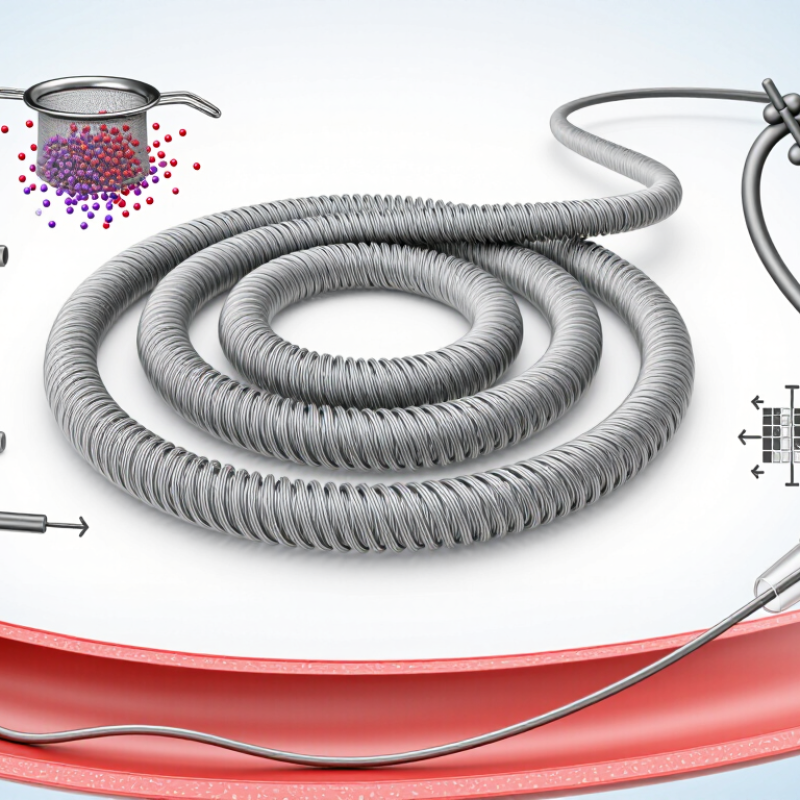
How Nitinol wires are applied in cardiovascular devices is becoming a central question for 2026 product development. Their superelasticity helps guidewires navigate curved vessels, while shape memory supports self-expanding stents, embolic filters, valve frames, and occlusion systems. A thin wire can bend through a catheter, then recover its intended geometry inside the body.

The market is expanding, but the numbers require caution. Grand View Research and Fortune Business Insights report sustained growth in the global nitinol medical-device sector, driven by minimally invasive cardiovascular procedures. Their forecasts differ because they define products, regions, and device categories differently. That difference matters. It prevents simple market claims from replacing engineering evidence.

Thomas W. Duerig, a widely recognized nitinol specialist, described the alloy as “a very forgiving material.” That flexibility is valuable, but it is not unlimited. Repeated bending, surface defects, nickel release, corrosion, and inconsistent heat treatment can affect long-term performance. Clinical teams and manufacturers must connect material data with real deployment conditions, not laboratory optimism alone.

In practice, manufacturers select wire diameter, transformation temperature, tensile strength, and surface finish for each device. A guidewire may need torque response and smooth tracking. A stent frame may require radial force and fatigue resistance. These are different demands.

The 2026 discussion should therefore examine use cases, not only market size. It should compare clinical purpose, manufacturing constraints, regulatory expectations, and patient safety. Nitinol remains powerful. It also deserves careful skepticism.
2026 Top Nitinol Wire Uses in Cardiovascular Devices?

Nitinol Wire: Properties That Enable Cardiovascular Applications

2026 Top Nitinol Wire Uses in Cardiovascular Devices

Nitinol wire supports cardiovascular devices where flexibility, recovery, and fatigue resistance matter. Its superelastic behavior lets a wire bend through narrow, winding vessels and return toward its intended shape. This is useful in guidewires, self-expanding stents, embolic protection frames, and vascular filters. The wire can also form compact delivery systems, then expand after deployment.

Shape memory adds another design option. Heat-treated wire can recover a programmed geometry when exposed to body temperature. Engineers use this effect in retrieval baskets, occlusion structures, and some valve-support frames. Nitinol also resists kinking better than many conventional metals during catheter navigation. That benefit feels practical in the operating room, especially when a device passes through several curves.

Small details decide safety.

However, Nitinol is not automatically reliable. Nickel content requires careful surface treatment, corrosion testing, and biological evaluation. Repeated flexing can create fatigue damage, particularly near sharp bends, welds, or laser-cut features. Device teams should measure radial force, deployment accuracy, particulate release, and long-term durability under realistic conditions. Radiopacity can also be limited, so imaging markers may be necessary. My own design preference would be conservative: reduce unnecessary strain, inspect every surface, and question results from ideal laboratory models. A successful prototype is only evidence, not proof of clinical performance.

Nitinol Wire in Stents and Vascular Scaffolding

Nitinol wire is becoming a practical foundation for self-expanding stents and vascular scaffolding. Its shape-memory behavior supports controlled deployment through narrow catheters. Superelasticity also helps the scaffold recover after vessel compression.

928,741

cardiovascular deaths in the United States during 2020

The American Heart Association’s Heart Disease and Stroke Statistics—2024 Update reported 928,741 cardiovascular deaths in the United States during 2020. This burden keeps vascular intervention clinically important. Industry analyses, including Grand View Research’s 2024 nitinol medical devices report, identify cardiovascular devices as a leading application segment. However, market growth does not automatically prove better patient outcomes.

In stent frames, thin nitinol wires can create flexible cells that follow curved arteries. The structure must provide radial support without blocking side branches. Engineers therefore balance wire diameter, laser-cut geometry, fatigue resistance, and radiopacity. That balance is difficult. Excessive outward force may irritate vessel walls, while insufficient force can encourage recoil.

Clinical performance also depends on surface treatment, delivery accuracy, and long-term corrosion resistance.

The U.S. Food and Drug Administration’s guidance on nitinol-containing devices emphasizes phase transformation, fatigue testing, and nickel-release evaluation. These tests matter because millions of loading cycles can expose weaknesses invisible during deployment.

Some designs still appear elegant on paper but remain difficult to manufacture consistently. That gap deserves more attention in 2026.

Nitinol Wire for Guidewires and Catheter Navigation

2026 Top Nitinol Wire Uses in Cardiovascular Devices

Nitinol wire remains important in guidewires and catheter navigation. Its superelastic behavior helps the wire bend through curved vascular paths without permanent deformation. In practice, this can support smoother advancement around vessel branches and narrow turns. The wire also provides useful torque transmission from the operator’s hand to the distal tip.

Small movements matter.

Guidewire performance depends on more than the alloy. Diameter, taper, surface finish, core design, and distal flexibility all affect navigation. A softer tip may reduce vessel contact forces, while a stiffer shaft can improve pushability. However, excessive stiffness may increase trauma risk. Nitinol also has limited inherent radiopacity, so imaging visibility often requires markers or design adjustments. This trade-off deserves careful review.

Catheter systems can use nitinol wire components for steerable shafts, support structures, and controlled tip deflection. Superelastic recovery helps maintain shape during repeated bending, but fatigue resistance still requires rigorous testing. Manufacturing must control heat treatment, surface condition, dimensional accuracy, and corrosion performance. Nickel-containing materials also require biocompatibility assessment under applicable medical-device standards. From hands-on device development, one lesson is clear: flexibility alone does not guarantee navigation quality. A wire that feels responsive on the bench may behave differently inside a tortuous anatomy. Device teams should validate torque, kink resistance, fatigue, and tracking in realistic anatomical models.

Nitinol Wire in Filters, Occlusion Devices, and Retrieval Systems

Nitinol wire is becoming a practical backbone for cardiovascular filters, occlusion devices, and retrieval systems. Its shape-memory behavior allows a compressed frame to expand inside a catheter and recover its intended geometry. This matters when access is narrow. A filter may need fine struts, stable wall contact, and controlled removal. Retrieval baskets use similar flexibility to capture misplaced fragments or temporary implants without excessive vessel trauma.

The clinical need is substantial. The World Health Organization reports that cardiovascular diseases caused about 17.9 million deaths in 2019. Meanwhile, Fortune Business Insights estimated the global cardiovascular devices market at roughly USD 56.3 billion in 2023, with continued growth projected through 2032. These figures do not measure nitinol wire directly. They do show the expanding environment for less invasive device designs. In practice, engineers often select wire diameters near the balance between radial force and fatigue resistance. That balance is not simple.

Occlusion devices use nitinol meshes or shaped frames to block abnormal blood flow. Filters can temporarily capture embolic material while preserving circulation around the structure. Retrieval systems depend on elastic recovery, radiopacity, and predictable deployment. ASTM F2063 provides material guidance for wrought nickel-titanium used in medical devices, while fatigue testing remains essential for cyclic vascular loading. The weak point is familiar: a frame that performs well on the bench may behave differently in calcified or tortuous anatomy. More clinical feedback is still needed. That gap deserves attention.

2026 Top Nitinol Wire Uses in Cardiovascular Devices? - Nitinol Wire in Filters, Occlusion Devices, and Retrieval Systems

Application Category Representative Device How Nitinol Wire Is Used Relevant Material Property Clinical or Engineering Benefit Key Design Considerations
Vascular Filters Inferior vena cava (IVC) filter Forms cone-shaped or basket-like filter legs and supports that expand inside the vena cava to intercept embolic material. Superelasticity and shape-memory behavior Enables constrained delivery through a catheter followed by self-expansion at the target location. Filtration efficiency, vessel-wall contact force, migration resistance, retrieval capability, fracture resistance, and long-term biocompatibility.
Vascular Filters Embolic protection filter Creates a temporary distal filter during selected endovascular procedures to capture debris before it reaches downstream vessels. High elastic recovery and fatigue resistance Supports low-profile deployment and stable apposition in changing vessel diameters. Mesh pore size, blood-flow preservation, debris capacity, ease of recapture, and resistance to kinking during navigation.
Occlusion Devices Septal occluder Provides the structural framework for two self-expanding discs connected by a waist to close selected atrial or ventricular septal defects. Shape memory and controlled radial force Allows delivery in a compact form and deployment into a predefined disc-and-waist geometry. Disc stability, defect coverage, conformability, thrombus formation control, endothelialization, and retrievability before release.
Occlusion Devices Left atrial appendage occlusion device Forms a self-expanding plug or lobe that seals the left atrial appendage and is commonly covered with a membrane or fabric. Superelastic expansion and fatigue durability Promotes stable anchoring and conformability within an anatomically variable appendage. Anchoring force, sealing performance, compression range, device stability, pericardial safety, and surface-healing characteristics.
Occlusion Devices Patent ductus arteriosus occluder Provides a self-expanding plug, cone, or coil-like framework for closing an abnormal connection between the aorta and pulmonary artery. Thermally recoverable shape and radial support Facilitates catheter delivery and adaptation to the ductal anatomy after deployment. Occlusion speed, protrusion into adjacent vessels, retention force, hemolysis risk, and suitability for pediatric anatomy.
Occlusion Devices Vascular embolization coil Acts as the structural core of detachable or pushable coils used to promote blood-flow reduction and thrombus formation in selected vessels. Shape memory and controlled coil recovery Enables compact loading, controlled deployment, and three-dimensional filling of a target space. Packing density, deployment accuracy, radiopacity, detachment reliability, migration resistance, and thrombogenic surface design.
Retrieval Systems Foreign-body retrieval snare Forms a collapsible loop or multi-loop snare for capturing fractured catheter components, guidewires, filters, or other intravascular objects. Superelastic loop recovery and kink resistance Maintains loop geometry after constrained delivery and improves capture in tortuous anatomy. Loop visibility, atraumatic tip design, capture force, rotational control, catheter compatibility, and resistance to permanent deformation.
Retrieval Systems Retrieval system for removable vena cava filters Uses a nitinol wire loop, hook, or grasping element to engage the filter apex and collapse the filter into a retrieval sheath. Elastic recovery and high-cycle durability Supports controlled recapture while minimizing the risk of loop collapse during engagement. Apex engagement, retrieval force, tissue incorporation, sheath diameter, radiographic visibility, and avoidance of caval injury.
Retrieval Systems Thrombus or clot-retrieval device Provides a self-expanding mesh or stent-like framework that engages clot and enables withdrawal through a catheter in selected vascular interventions. Superelastic radial expansion and shape recovery Allows the device to expand within the vessel and conform to clot and vessel geometry. Clot integration, vessel-wall interaction, radial force, flexibility, capture efficiency, and minimizing embolization during withdrawal.
Structural and Delivery Components Guidewire, retrieval shaft, or actuating wire Serves as a flexible structural or control element for steering, deployment, recapture, or manipulation of a cardiovascular device. Flexibility, torque response, fatigue resistance, and corrosion resistance Improves trackability and control while maintaining functionality through repeated bending cycles. Surface finish, weld or joint integrity, radiopacity, sterilization compatibility, particulate control, and resistance to fretting or stress corrosion.
Technical note: Nitinol is primarily valued in these applications for its nickel-titanium shape-memory behavior, superelasticity, flexibility, and ability to recover a programmed geometry after catheter constraint. Actual device performance depends on alloy composition, heat treatment, wire diameter, surface treatment, braid or mesh design, loading history, and the intended anatomical environment.

Key Factors for Selecting Nitinol Wire in Cardiovascular Devices

2026 Top Nitinol Wire Uses in Cardiovascular Devices?

Key Factors for Selecting Nitinol Wire in Cardiovascular Devices

Nitinol wire supports steerable guidewires, self-expanding frames, retrieval systems, and other minimally invasive cardiovascular tools. Selection begins with the device’s mechanical job, not the alloy’s reputation. A wire for repeated flexing needs high fatigue resistance and stable superelastic behavior. A deployment component may need controlled recovery force and predictable shape memory.

Diameter, surface finish, and straightness directly affect handling. A 0.2 mm change can alter pushability inside a tortuous vessel. Smooth electropolished surfaces may reduce friction and particulate risk, but finishing must be validated after forming. Transformation temperature also matters. It should match the intended body-temperature environment, sterilization process, and storage conditions. Small shifts can change force, flexibility, and deployment timing.

Material quality requires traceable chemistry, consistent inclusion control, and documented testing. Nickel release should be assessed within the finished device, not only from incoming wire. Engineers should review tensile data, bend cycling, corrosion resistance, and fatigue results under realistic loading. Radiopacity can be limited, so marker integration may be necessary. Laboratory curves are useful, but they cannot reproduce every vessel pathway. That limitation deserves attention. Supplier data should be checked against forming trials, simulated-use testing, and applicable medical-device standards. Some early design assumptions will fail. That is normal, if the team learns before clinical evaluation.

2026 Top Nitinol Wire Uses in Cardiovascular Devices

Nitinol wire is widely selected for cardiovascular guidewires, self-expanding implants, embolic-protection systems, retrieval devices, and catheter reinforcement structures. The chart ranks the main selection factors by relative engineering importance on a 1–5 scale; it is not market-share data.

Superelastic recovery and fatigue resistance are especially important for self-expanding stents, filters, and retrieval systems. Surface finish, corrosion resistance, dimensional consistency, and radiopacity influence deliverability, durability, visibility, and compatibility with the intended cardiovascular procedure.

FAQS

What makes nitinol wire useful in cardiovascular devices?

It bends through narrow, curved vessels and returns toward its original shape. Its flexibility supports guidewires, stents, filters, and retrieval frames. Small details matter.

How does superelasticity help during catheter navigation?

Superelastic wire resists permanent kinking while moving through several vessel curves. It can bend inside a catheter, then recover after release. This improves handling, but not every anatomy behaves predictably.

How does shape memory support device deployment?

Heat-treated nitinol can recover a programmed shape near body temperature. A compact frame can expand after leaving the catheter. That balance is difficult.

Where is nitinol wire used in self-expanding stents?

Thin wires form flexible cells that follow curved arteries. The frame must resist vessel recoil without pressing too strongly against the vessel wall. Side branches must remain open.

Why is fatigue testing important for nitinol devices?

Vascular devices may flex repeatedly during everyday movement and blood flow. Damage can begin near sharp bends, joints, or laser-cut features. Bench results can mislead.

What safety concerns are linked to nickel in nitinol?

Nickel content requires careful surface treatment, corrosion testing, and biological evaluation. Testing should examine possible nickel release under long-term conditions. A polished surface is not proof of safety.

How does nitinol support filters and retrieval systems?

Compressed frames can expand inside a catheter and contact the vessel wall gently. Retrieval baskets use elastic recovery to capture temporary structures or fragments. Removal still requires controlled force and accurate positioning.

What limitations should engineers consider when designing nitinol devices?

Radiopacity may be limited, so imaging markers can improve visibility. Teams should measure deployment accuracy, radial force, particle release, and durability. I would question ideal laboratory results more carefully.

Conclusion

Nitinol wire is increasingly important in cardiovascular devices because its shape-memory behavior, superelasticity, flexibility, fatigue resistance, and biocompatibility support reliable performance in demanding procedures. How Nitinol wires are applied in cardiovascular devices depends on the required balance of strength, flexibility, recovery force, and deliverability. In stents and vascular scaffolding, Nitinol wire can form self-expanding structures that support narrowed vessels while adapting to movement and changing anatomy. Its flexibility and kink resistance also make it suitable for guidewires and catheter navigation, helping clinicians access challenging vascular pathways with improved control.

Beyond these applications, Nitinol wire is used in filters, occlusion devices, and retrieval systems, where controlled expansion, secure positioning, and dependable recovery are essential. Selecting the right wire requires careful consideration of diameter, alloy condition, surface finish, fatigue life, radiopacity requirements, corrosion resistance, and manufacturing consistency. By matching these properties with the device’s intended function, designers can develop cardiovascular solutions that balance safety, durability, precision, and procedural efficiency.

Sophia

Sophia

Sophia is a dedicated marketing professional with an exceptional depth of knowledge about her company's products and services. With a keen understanding of market trends and customer needs, she crafts insightful blog posts that not only inform but also engage readers, enriching the company’s online......